


Egypt’s finance minister voiced confidence in his country’s ability to cope should the US Federal Reserve start tapering its pandemic stimulus, a risk because that may undercut the North African nation’s appeal among investors.
“We are closely monitoring” how the Fed’s decision could affect the cost of borrowing, Mohamed Maait said in an interview with Bloomberg TV. “We are taking into consideration our experience with such a situation,” he said, recalling the more than $20bn that left the country over the past three years as a result of volatility in emerging markets and the impact of the Covid-19 pandemic.
“We have to be ready, always,” Maait said.
Egypt’s authorities have plenty of recent experience in crisis management, after a crippling dollar shortage prompted a currency devaluation and sweeping reforms in 2016 that were backed by a $12bn International Monetary Fund programme. That was followed by another loan to help cope with the pandemic.
IMF backing helped draw in investors enamoured with a real interest rate that’s one of the highest among more than 50 major economies tracked by Bloomberg. They subsequently pumped billions of dollars into the local debt market.
But that kind of appeal has come at a price.
S&P Global Ratings warned in a recent report that Egypt’s reliance on borrowing has left it with a crippling debt-service burden that’s one of the heaviest among all sovereigns. It said authorities need to get more funding from equity sources if the country is to weather a potential increase in global interest rates.
Maait downplayed those concerns. “We are containing debt-to-GDP ratio in the corona time,” he said.
Debt servicing accounted for 36% of budget spending as of June, down from 40% a year earlier, and the government aims to cut it to 32% by end of June 2022, Maait said. It’s also working to improve the investment environment and wants to see foreign-direct investment in-flows into projects that “can be part of our economic growth,” helping create jobs and boost exports, he said.
Maait said the nation could issue dollar or euro-denominated bonds, and maybe sell more green bonds, before the fiscal year ends next June. Last year it tapped international markets for $3.8bn in dollar-denominated bonds and sold $750mn in the region’s first sovereign green bonds.
Egypt also hopes to issue its first sovereign sukuk bond in the first half of 2022, he said. “We haven’t decided the size yet, but it may range between $500mn and $700mn.”
IMF again?
Asked if Egypt was planning to approach the IMF for an agreement that doesn’t involve borrowing to help cement investor confidence, Maait said the engagement with the fund “will continue, whatever the form.”
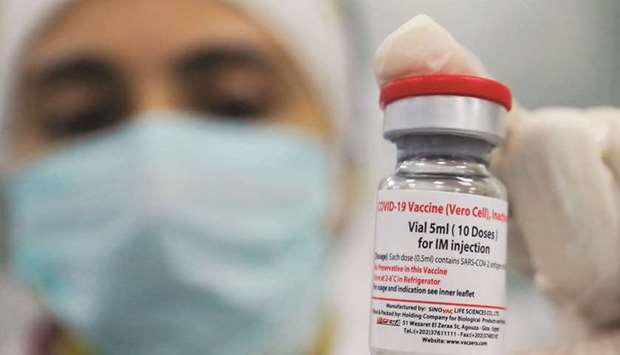
A doctor holds a vial of China’s Sinovac Covid-19 vaccine at the Holding Company for Biological Products and Vaccines u201cVacserau201d in Cairo (file). More than $20bn that left the country over the past three years as a result of volatility in emerging markets and the impact of the Covid -19 pandemic.