


The United Kingdom will not “sweep away” the controversial Northern Ireland Brexit protocol, despite renewed calls for its abolition by the Democratic Unionist party, the Brexit minister, Lord Frost, has said.
“I want to be clear that any response which avoids serious engagement with those ideas, and aims at just dragging out the process, will in the end not work for us,” he said in a speech to the British-Irish Association.
However, Frost renewed his demands for fundamental changes on its implementation, warning that the ongoing row could have a long-term chilling effect on wider EU-UK relations unless it was resolved.
“I worry that if we didn’t solve this issue, it is capable of generating the sorts of cold mistrust which will last between us and the European Union, and [the mistrust] will spread across the whole relationship [and] will hold back the potential for a new era of co-operation between us in a world which does need us to work together,” he said at the conference in Oxford yesterday.
The row over the protocol, known in some quarters as “sausage wars”, blew up within days of Brexit entering force this January, with barriers imposed for the first time for trade of food, plants and medicines from Great Britain.
In March the EU began an infringement procedure against Britain over changes to the Northern Ireland trade arrangements that, according to Brussels, breached the Brexit divorce deal agreed with London last year.
The bloc’s executive said in July it was holding off on the legal action after London asked for a standstill period.
The protocol seeks to protect a 1998 peace accord by keeping an open border between Northern Ireland and EU member Ireland, without opening a back door to the bloc’s single market.
Checks on goods between the British mainland and Northern Ireland have disrupted trade flows and angered unionists who resist any moves that they see as endangering the province’s role in the United Kingdom.
However, as key talks are set to resume, Lord Frost told the meeting of senior public figures that triggering Article 16 and suspending the protocol was not his preferred option, even though the “threshold” for such a move had had “been met”.
He called on the EU to engage seriously with proposals for radical changes to the protocol published in a UK government command paper in July, arguing that “the proposals do not remove it [the Northern Ireland protocol]” and actually “retain controls in the Irish Sea for certain purposes”.
He said society would not forgive either side if they did not make the “small muscle movements” needed to make the protocol work.
“When one looks at the price [of failure or success], and sets it against other challenges that we face in (coronavirus pandemic) recovery, and Afghanistan, one wonders what future generations would say” if the current impasse is not shattered.
“We have no interest at all in having a fractious and difficult relationship with the EU,” he said.
Frost was speaking just hours after the Irish prime minister said at the same conference that unilateral moves by the UK would always be doomed to failure, arguing that history showed partnerships were the only route to success.
Talks over implementation of the protocol have continued between officials in London and Brussels over the summer but senior sources say engagement is “slow” and it is unlikely that the an agreement will be reached by September 30, indicating talks will extend into the winter months.
The Northern Ireland secretary of state, Brandon Lewis, told the same conference that the UK is powering ahead with plans to “level up” Northern Ireland, announcing a £730mn investment into the new Peace Plus programme “to support economic stability, peace and reconciliation in Northern Ireland”.
He spoke about the economic successes of the region, including the development of a massive cybersecurity sector employing 2,300 staff, but said that overall it still “punches well below its weight” with pockets of “unacceptable levels of deprivation” and much more to be done on integration of education with just 7% of children going to non-denominational schools.
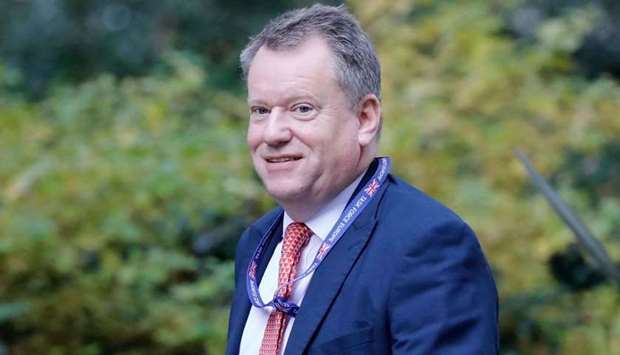
Brexit minister David Frost. (AFP via Getty Images)