


US monetary policy will offer “powerful support” to the economy “until the recovery is complete,” Federal Reserve Chair Jerome Powell said on Wednesday in remarks that portrayed a recent jump in inflation as temporary and focused on the need for continued job gains.
Any move to pull back support for the economy, by first slowing the US central bank’s $120bn in monthly bond purchases, is “still a ways off,” Powell said in comments prepared for delivery to the US House of Representatives Financial Services Committee.
Despite recent job gains “there is still a long way to go” in pulling millions of people from the sidelines, many of them lower-wage, Black or Hispanic workers hit hardest by the recession triggered by the coronavirus pandemic, Powell said.
Addressing concerns that inflation posed new risks of its own, Powell said the pace of price increases “will likely remain elevated in coming months before moderating,” language that indicated he saw no need to rush the shift towards post-pandemic policy.
Long-term inflation expectations, he said, remained consistent with the Fed’s 2% inflation target.
US Treasury yields fell after the release of Powell’s prepared testimony even though prices of factory inputs rose at a higher-than-expected pace, an indication markets construed his comments as keeping the monetary taps open. The remarks were notable as well for excluding any mention of the Delta variant of the coronavirus as a risk to the recovery, with Powell saying the Fed expects strong upcoming job gains “as public health conditions continue to improve.”
Powell is likely to be questioned about that issue as well as the Fed’s outlook on inflation, the labour market and the economic recovery during two days of testimony in Congress.
Faster-than-anticipated inflation and a new rise in coronavirus infections due to the Delta variant pose a potential dilemma for Powell, pulling the outlook for policy in opposite directions.
The Fed’s June meeting saw officials begin a move towards post-pandemic policy, with some of them poised to tighten financial conditions sooner to ensure inflation remains contained.
Renewed coronavirus-related risks, if they materialise, could push the Fed in the other direction of keeping support for the recovery in place longer in case household and business spending wanes amid a rise in new infections.
Falling Treasury bond yields have indicated concern among investors about slowing US economic growth, even as new data on prices this week showed consumers paying appreciably more for an array of goods and services, including appliances, fabric, beef and rent.
In a report to Congress last week, the Fed said that as the “extraordinary circumstances” of the reopening subside, “supply and demand should become better aligned, and inflation is widely expected to move down.” While each month of high inflation makes it harder to stick to that conviction, Powell for now is keeping to the Fed’s core narrative of a job market that still needs massive help from the central bank to restore it to its pre-pandemic health and minimise the long-term damage from a historic, virus-driven calamity.
The Fed has said it will not reduce its bond-buying programme absent “substantial further progress” in regaining the roughly 7.5mn jobs still missing since the onset of the pandemic in March 2020, a threshold policymakers feel will likely be met later this year.
That hinges, however, on continued reopening of the economy, recovery in the travel, leisure and other “social” industries devastated by the health crisis, and the willingness of currently unemployed or homebound individuals to fill the record number of jobs on offer.
When Powell last spoke about the economy at a news briefing after the end of the June 15-16 policy meeting, new daily coronavirus infections were falling toward recent lows, and the Fed dropped language from its policy statement that the pandemic “continues to weigh on the economy.”
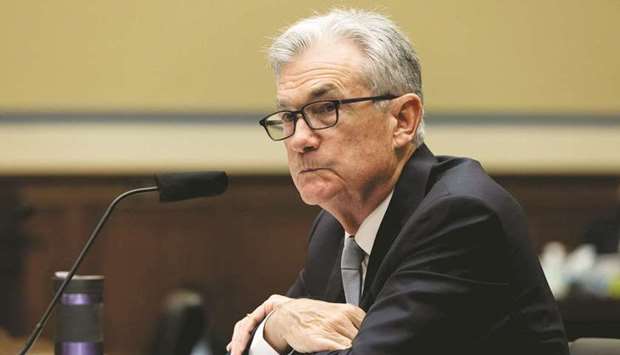
Federal Reserve Chair Jerome Powell.