


Qatar’s Gulf Organisation for Research and Development (GORD) and India’s Convergence Energy Services (CESL) have joined hands to foster carbon neutral growth by promoting GHG (greenhouse gas) reduction projects and carbon offsetting.
In this regard, GORD has entered into a memorandum of understanding (MoU) with CESL whereby the two entities will work towards a range of initiatives aimed at accelerating climate solutions.
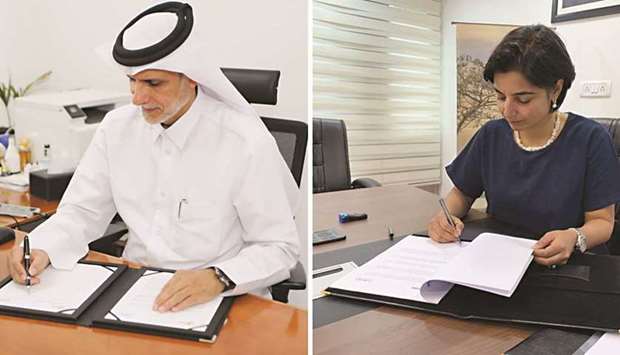
The MoU was signed by GORD’s founding chairman, Dr Yousef al-Horr, and CESL chief executive Mahua Acharya.
The areas of collaboration covered in the MoU primarily deal with GORD’s activities for promoting Middle East and North Africa's region’s first and only voluntary carbon market programme Global Carbon Council (GCC), which expects to issue more than 10mn carbon credits in 2021 alone, based on applications from various GHG projects so far.
Under this agreement, GORD will provide capacity building for CESL team in its plans to register all CESL GHG reduction projects with GCC to seek carbon credits issued to its projects. The GCC is dedicated to drive climate actions to develop low-carbon economies.
Carbon credits issued by the GCC are fully approved under United Nations’ ICAO (International Civil Aviation Organisation) initiative “CORSIA” to be used for carbon neutral growth in international aviation industry as well as for carbon neutrality of other sectors.
Several corporates and airlines are eyeing upon GCC projects to procure carbon credits from, to achieve their carbon neutrality goals. There are several corporates opening the account at GCC’s global carbon registry to be able to sell, buy or trade carbon credits issued by the GCC.
As a part of the MoU, GORD will develop CESL’s capacity on the GCC’s rules of procedure for registration of projects and carbon credit issuance. In the long run, CESL will likely benefit from GORD’s knowledge base about the buyers of GCC-issued carbon credits.
"By formalising our collaboration with CESL, our overarching goal is to catalyse climate actions and sustainable development while also availing socio-economic benefits of carbon mitigation projects. CESL projects have high intrinsic value to communities and economy as a whole, apart from their natural role in climate mitigation,” al-Horr said.
Acharya said CESL, an organisation of the Indian government, is committed to promoting climate action and sustainable development by helping the communities.
"We very much value the high-quality voluntary carbon market offered by the GCC and plan to register all our projects with GCC with an aim to raise extremely critical climate finance to ensure the viability of our projects. In this journey, GORD’s co-operation on capacity building is very important for us,” she said.
CESL, a subsidiary of Energy Efficiency Services (EESL), is focused on energy solutions in areas of renewables, electric mobility and climate change. The organisation is working towards delivering renewable energy solutions to power agricultural pumps, street lighting, domestic lighting and cooking appliances in villages across India.
Using the GCC’s platform, CESL plans to register its GHG reduction projects for carbon credits issuance.
The recent MoU between GORD and CESL comes as a continuation of a former agreement between GORD and EESL, CESL’s parent company, in June 2020, whereby the two entities are collaborating to provide to Qatari stakeholders the solutions and technologies in energy efficiency, renewable energy, sustainable transport solutions, carbon offsetting and carbon neutrality.
The MoU was signed by GORD’s founding chairman, Dr Yousef al-Horr, and CESL chief executive Mahua Acharya.
The areas of collaboration covered in the MoU primarily deal with GORD’s activities for promoting Middle East and North Africa's region’s first and only voluntary carbon market programme Global Carbon Council (GCC), which expects to issue more than 10mn carbon credits in 2021 alone, based on applications from various GHG projects so far.
Under this agreement, GORD will provide capacity building for CESL team in its plans to register all CESL GHG reduction projects with GCC to seek carbon credits issued to its projects. The GCC is dedicated to drive climate actions to develop low-carbon economies.
Carbon credits issued by the GCC are fully approved under United Nations’ ICAO (International Civil Aviation Organisation) initiative “CORSIA” to be used for carbon neutral growth in international aviation industry as well as for carbon neutrality of other sectors.
Several corporates and airlines are eyeing upon GCC projects to procure carbon credits from, to achieve their carbon neutrality goals. There are several corporates opening the account at GCC’s global carbon registry to be able to sell, buy or trade carbon credits issued by the GCC.
As a part of the MoU, GORD will develop CESL’s capacity on the GCC’s rules of procedure for registration of projects and carbon credit issuance. In the long run, CESL will likely benefit from GORD’s knowledge base about the buyers of GCC-issued carbon credits.
"By formalising our collaboration with CESL, our overarching goal is to catalyse climate actions and sustainable development while also availing socio-economic benefits of carbon mitigation projects. CESL projects have high intrinsic value to communities and economy as a whole, apart from their natural role in climate mitigation,” al-Horr said.
Acharya said CESL, an organisation of the Indian government, is committed to promoting climate action and sustainable development by helping the communities.
"We very much value the high-quality voluntary carbon market offered by the GCC and plan to register all our projects with GCC with an aim to raise extremely critical climate finance to ensure the viability of our projects. In this journey, GORD’s co-operation on capacity building is very important for us,” she said.
CESL, a subsidiary of Energy Efficiency Services (EESL), is focused on energy solutions in areas of renewables, electric mobility and climate change. The organisation is working towards delivering renewable energy solutions to power agricultural pumps, street lighting, domestic lighting and cooking appliances in villages across India.
Using the GCC’s platform, CESL plans to register its GHG reduction projects for carbon credits issuance.
The recent MoU between GORD and CESL comes as a continuation of a former agreement between GORD and EESL, CESL’s parent company, in June 2020, whereby the two entities are collaborating to provide to Qatari stakeholders the solutions and technologies in energy efficiency, renewable energy, sustainable transport solutions, carbon offsetting and carbon neutrality.