


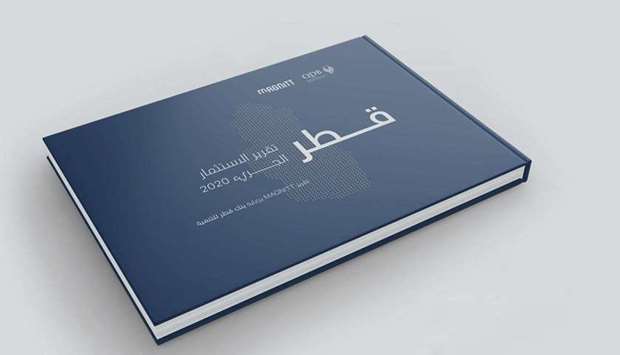
Qatar Development Bank (QDB) has co-operated with research platform, MAGNiTT, to release the first-of-its-kind ‘Qatar Venture Investment Report 2020’.
The report, which was prepared by MAGNiTT, was commissioned by QDB given its position as one of the key players in the venture capital (VC) investment field in the State of Qatar.
The landmark report aims to showcase the impact of venture investment in Qatar, the evolution of the Qatar funding ecosystem, give an overview of the Qatar investment landscape, and provide a map of the Qatari ecosystem.
It focuses on VCs due to their importance in any economic market in general, since they are one of the first sources of support for SMEs and start-ups, being among the first investment sources to quickly transfuse this important sector with the funds it urgently needs to achieve its growth and harness the innovation it can bring to the market.
QDB CEO Abdulaziz bin Nasser al-Khalifa said, “In our goal to continue supporting SMEs and entrepreneurs due to their importance to the diversification of our economy, we set our sights towards venture capital, which is considered an integral component of the support ecosystem for this important sector.”
He said VCs are at the forefront towards unlocking the unbound potential of startups and SMEs and accelerate their growth and specifies incentives and commitments that help them achieve competitiveness.
“This report will highlight the continuous growth we are witnessing in this area thanks to the forward-thinking, collective efforts of QDB and the other stakeholders operating within the country.
“It is these efforts and this co-operation which are helping us drive the development and diversification of our economy and forge a bright future with a thriving economy with a truly prosperous SME sector able to grow and achieve sustainable success both locally and internationally,” al-Khalifa said.
The report highlights some very crucial key points, including VC funding in Qatar’s persistence through Covid-19, with a growth of 9% between 2019 and 2020. Startups in Qatar raised QR22mn in 2020, slightly more than the QR21mn deployed in 2019. Although the VC ecosystem demonstrated resilience against the pandemic, the number of registered deals only rose by two year-on-year (y-o-y) to finish 2020 at 24.
The report also sheds light on the critical role played by accelerators in driving investment rounds in Qatar in 2020, contrary to the regional trend. It shows that, in Qatar’s venture investment ecosystem, accelerated programmes were responsible for 33% of all transactions.
This defied the trend noted in Mena where Covid-19 forced a slowdown of accelerator programmes, with accelerated deals dropping by nine percentage points y-o-y in 2020 (accounting for 23% of all deals in 2020).
Philip Bahoshy, CEO of MAGNiTT, said: “The Qatari ecosystem, similar to other leading ecosystems across Mena, has shown signs of a positive rebound from 2020 and the pandemic. A strong start to 2021 has been driven by increased government initiatives, private participation in investment rounds, and increased capital being deployed into tech-based startups, which was charted in the 2020 Qatar Venture Investment report. We look forward to seeing how the rest of the year progresses as the ecosystem matures.”
The report also highlights that the need for digitalisation in 2020 made a positive impact on the e-commerce, F&B, and home services sectors, adding that in terms of Qatar's top startup industries by funding, F&B and e-commerce collectively accounted for 53% of all VC funding in the ecosystem. It also states that the number of startups to raise funding from the home services sector went from one in 2019 to three in 2020.
The MAGNiTT report does not limit its coverage to QDB’s activities, but also covers the broader investment ecosystem in the country. It is considered the first-of-its-kind for Qatar and among the first in the region, with only a handful of reports being released for the Mena region to date.
The landmark report aims to showcase the impact of venture investment in Qatar, the evolution of the Qatar funding ecosystem, give an overview of the Qatar investment landscape, and provide a map of the Qatari ecosystem.
It focuses on VCs due to their importance in any economic market in general, since they are one of the first sources of support for SMEs and start-ups, being among the first investment sources to quickly transfuse this important sector with the funds it urgently needs to achieve its growth and harness the innovation it can bring to the market.
QDB CEO Abdulaziz bin Nasser al-Khalifa said, “In our goal to continue supporting SMEs and entrepreneurs due to their importance to the diversification of our economy, we set our sights towards venture capital, which is considered an integral component of the support ecosystem for this important sector.”
He said VCs are at the forefront towards unlocking the unbound potential of startups and SMEs and accelerate their growth and specifies incentives and commitments that help them achieve competitiveness.
“This report will highlight the continuous growth we are witnessing in this area thanks to the forward-thinking, collective efforts of QDB and the other stakeholders operating within the country.
“It is these efforts and this co-operation which are helping us drive the development and diversification of our economy and forge a bright future with a thriving economy with a truly prosperous SME sector able to grow and achieve sustainable success both locally and internationally,” al-Khalifa said.
The report highlights some very crucial key points, including VC funding in Qatar’s persistence through Covid-19, with a growth of 9% between 2019 and 2020. Startups in Qatar raised QR22mn in 2020, slightly more than the QR21mn deployed in 2019. Although the VC ecosystem demonstrated resilience against the pandemic, the number of registered deals only rose by two year-on-year (y-o-y) to finish 2020 at 24.
The report also sheds light on the critical role played by accelerators in driving investment rounds in Qatar in 2020, contrary to the regional trend. It shows that, in Qatar’s venture investment ecosystem, accelerated programmes were responsible for 33% of all transactions.
This defied the trend noted in Mena where Covid-19 forced a slowdown of accelerator programmes, with accelerated deals dropping by nine percentage points y-o-y in 2020 (accounting for 23% of all deals in 2020).
Philip Bahoshy, CEO of MAGNiTT, said: “The Qatari ecosystem, similar to other leading ecosystems across Mena, has shown signs of a positive rebound from 2020 and the pandemic. A strong start to 2021 has been driven by increased government initiatives, private participation in investment rounds, and increased capital being deployed into tech-based startups, which was charted in the 2020 Qatar Venture Investment report. We look forward to seeing how the rest of the year progresses as the ecosystem matures.”
The report also highlights that the need for digitalisation in 2020 made a positive impact on the e-commerce, F&B, and home services sectors, adding that in terms of Qatar's top startup industries by funding, F&B and e-commerce collectively accounted for 53% of all VC funding in the ecosystem. It also states that the number of startups to raise funding from the home services sector went from one in 2019 to three in 2020.
The MAGNiTT report does not limit its coverage to QDB’s activities, but also covers the broader investment ecosystem in the country. It is considered the first-of-its-kind for Qatar and among the first in the region, with only a handful of reports being released for the Mena region to date.