


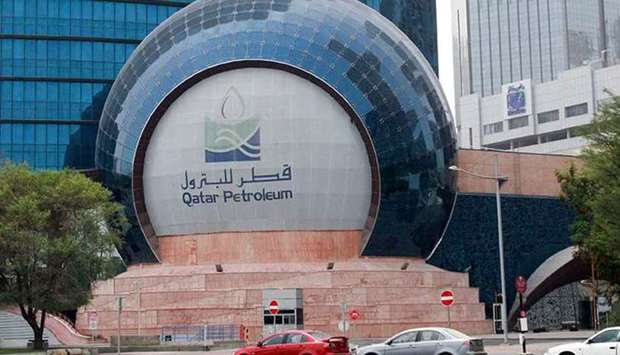
Fitch, a global credit rating agency, has assigned Qatar Petroleum (QP) a first-time long-term issuer default rating (IDR) of 'AA-' with "stable" outlook.
Fitch has also assigned QP's proposed notes an expected senior unsecured rating of 'AA-(EXP)', in line with the company's long-term IDR.
The assignment of the final senior unsecured rating will be contingent on the receipt of final documentation conforming to draft documentation already received.
The agency assesses the standalone credit profile (SCP) of QP at 'aa+', which is supported by the large scale of its LNG or liquefied natural gas franchise, low production costs, large reserve base and conservative leverage.
"While focused on a single country, its operations are predominantly gas, which makes it better placed for energy transition than other oil and gas majors," Fitch said.
Viewing QP's ownership and control as 'very strong'; Fitch said given QP's robust financial and operational profile, no government support has been required thus far, "but we expect support to be forthcoming if needed given the pivotal role QP plays within Qatar's infrastructure and economy, resulting in a strong score for the support track-record factor."
QP plans to increase LNG production capacity in two stages through the North Field East (NFE) and the North Field South (NFS) projects, which will raise Qatar's LNG production capacity in 2027 by 64% to 126mtpa.
When NFS is completed, it will raise Qatar's overall hydrocarbon production to about 6.7mn barrels of oil equivalent per day.
"Larger scale of low-cost production will be positive for QP's business profile and we view the required capex as manageable," it said.
QP holds around 70% stakes in six of its LNG-producing JVs. The JVs operate 14 LNG trains with a gross production capacity of 77mtpa (54mtpa net to QP).
Historically, funding at LNG JVs is on a project-finance basis with no recourse to QP and no cross-default provisions.
Finding that the JVs' debt is expected to be self-funded by the respective projects, Fitch said it believes that the NFE and NFS expansion projects will be realised in a similar ownership and funding structure.
As a result, the agency focuses its assessment of QP's financial profile excluding JVs' debt but including dividends received from JVs in FFO.
Fitch noted that QP estimates that global LNG demand grew 1.4% year-on-year in 2020, due to higher demand from China, Turkey and India.
The industry estimates LNG demand will grow 3.6% until 2040 versus 1.5% for global gas demand. Higher flexibility of LNG transportation than natural gas traditionally sent via pipelines supports QP's credit profile.
Long-term LNG demand prospects are also superior to oil, the latter of which may see quicker demand reduction due to energy transition to low GHG-emission technologies.
Qatar sells around 80% of LNG under long-term contracts. A similar portion of total output is linked to oil prices (Brent and Japan customs cleared crude).
Highlighting that short-term sales are via agreements with a duration of one to three years, it said a large portion of contracted volumes "supports the stability" of QP's cash flow.
Fitch has also assigned QP's proposed notes an expected senior unsecured rating of 'AA-(EXP)', in line with the company's long-term IDR.
The assignment of the final senior unsecured rating will be contingent on the receipt of final documentation conforming to draft documentation already received.
The agency assesses the standalone credit profile (SCP) of QP at 'aa+', which is supported by the large scale of its LNG or liquefied natural gas franchise, low production costs, large reserve base and conservative leverage.
"While focused on a single country, its operations are predominantly gas, which makes it better placed for energy transition than other oil and gas majors," Fitch said.
Viewing QP's ownership and control as 'very strong'; Fitch said given QP's robust financial and operational profile, no government support has been required thus far, "but we expect support to be forthcoming if needed given the pivotal role QP plays within Qatar's infrastructure and economy, resulting in a strong score for the support track-record factor."
QP plans to increase LNG production capacity in two stages through the North Field East (NFE) and the North Field South (NFS) projects, which will raise Qatar's LNG production capacity in 2027 by 64% to 126mtpa.
When NFS is completed, it will raise Qatar's overall hydrocarbon production to about 6.7mn barrels of oil equivalent per day.
"Larger scale of low-cost production will be positive for QP's business profile and we view the required capex as manageable," it said.
QP holds around 70% stakes in six of its LNG-producing JVs. The JVs operate 14 LNG trains with a gross production capacity of 77mtpa (54mtpa net to QP).
Historically, funding at LNG JVs is on a project-finance basis with no recourse to QP and no cross-default provisions.
Finding that the JVs' debt is expected to be self-funded by the respective projects, Fitch said it believes that the NFE and NFS expansion projects will be realised in a similar ownership and funding structure.
As a result, the agency focuses its assessment of QP's financial profile excluding JVs' debt but including dividends received from JVs in FFO.
Fitch noted that QP estimates that global LNG demand grew 1.4% year-on-year in 2020, due to higher demand from China, Turkey and India.
The industry estimates LNG demand will grow 3.6% until 2040 versus 1.5% for global gas demand. Higher flexibility of LNG transportation than natural gas traditionally sent via pipelines supports QP's credit profile.
Long-term LNG demand prospects are also superior to oil, the latter of which may see quicker demand reduction due to energy transition to low GHG-emission technologies.
Qatar sells around 80% of LNG under long-term contracts. A similar portion of total output is linked to oil prices (Brent and Japan customs cleared crude).
Highlighting that short-term sales are via agreements with a duration of one to three years, it said a large portion of contracted volumes "supports the stability" of QP's cash flow.