


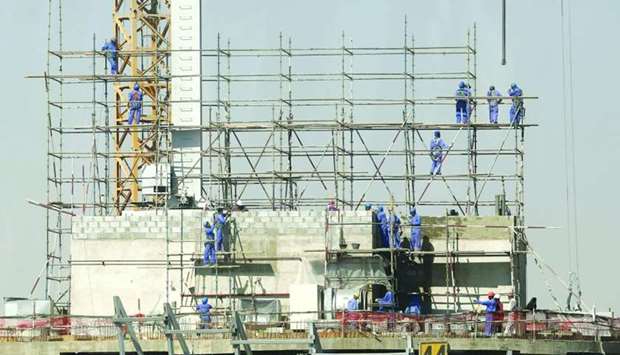
The Ministry of Administrative Development, Labour and Social Affairs (MADLSA) has begun implementing the ministerial decision No 17 for the year 2021, on the precautions necessary to protect workers from heat stress in open work sites during the summer period, QNA reported.
The ministry said in a statement, that according to the decision that came into effect to replace Resolution No 16 issued in 2007, working hours are determined for work performed under the sun or in open workplaces (and other than shaded and ventilated workplaces), during the period from June 1 to September 15 of each year, under which it is not permitted to start work from 10am in the morning until 3.30pm in the evening.
The ministry emphasised that the employer should set a schedule for determining the daily working hours in accordance with the provisions of this decision, and place this schedule in a visible place to make it easy for all workers to view, and labour inspectors can observe on their inspection visits.
It stressed the need to stop working in open areas if the temperature index scale of the wet bulb (WBGT) device exceeds 32.1C in a specific workplace, regardless of when this occurs.
It should be noted here that the temperature meter takes into account the surrounding environment temperature, humidity, solar radiation and wind speed.
The ministry explained that the new decision helps reduce the risks of heat stress that workers may be exposed to, and supports the health and safety plans that will be implemented during the summer period.
The new measures include the development of a joint plan with companies and workers to assess the risks of heat stress and mitigate its effects and to update it periodically, provided that a copy of the assessment is kept in the workplace for labour inspectors to review. The measures also include the provision of training on dealing with heat stress for all workers by May each year, and the provision of free drinking water for all workers at a suitable cold temperature throughout the work period, as well as shaded resting places that are easily accessible to workers and effective in providing protection from sunlight and high temperature while resting.
In addition, workers must be provided with personal protective equipment suitable for hot weather, including light, loose-fitting clothing, and receive annual free medical examinations to diagnose and manage chronic diseases that may contribute to the risk of heat stress. The medical reports must be preserved.
Meanwhile, paramedics and occupational safety and health supervisors at the workplace must be trained to provide directions and first aid to workers.
Moreover, the measures call for measuring the wet-bulb globe temperature (WBGT), taking into account all climatic parameters such as sunlight, air temperature among others and taking the necessary measures in the event of high indicators, monitoring and recording levels of climatic conditions in the workplace.
The ministry’s Labour Inspection Department works to raise awareness among employers and workers to commit to implementing the decisions and procedures necessary to determine working hours in open spaces during the summer period, through the ministry’s media outlets which are available in different languages, in order to ensure that workers receive the necessary awareness about safety and occupational health in the workplace throughout the year. The ministry also ensures media campaigns to highlight the guidelines and directives related to heat stress through the media.