


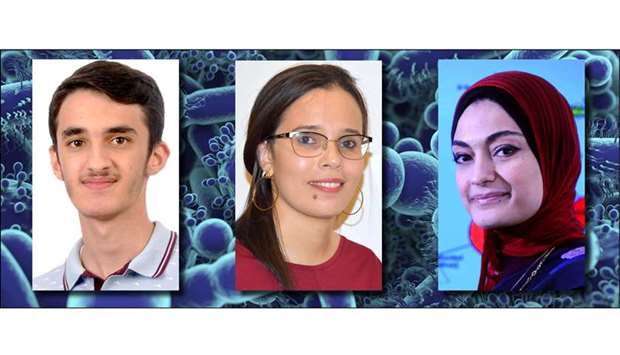
Faculty and student researchers at Weill Cornell Medicine – Qatar (WCM-Q) have examined the relationship between neurodevelopmental and gastrointestinal disorders, and the natural bacteria and fungi found within the body.
It is known that people suffering from neurodevelopmental illnesses like autism and attention deficit hyperactivity disorders often experience gastrointestinal issues and conversely, patients with gastrointestinal diseases are more likely to have issues with anxiety.
To try to understand this, researchers at WCM-Q conducted a pilot study involving 55 volunteers to look at their individual bacteriomes (the bacteria living naturally in their bodies) and mycobiomes (the fungi found naturally in their bodies). Each volunteer had either a neurodevelopment or gastrointestinal issue, along with a control group of individuals who had neither. Variables such as diet and intake of probiotic samples were also taken into consideration.
Each volunteer answered a questionnaire and provided a stool sample, and the different species of bacteria and fungi in each were analyzed.
Dr Ghizlane Bendriss, lecturer in biology at WCM-Q’s Division of Pre-medical Education, received a QNRF grant back in 2017 to lead the research. The project won interest in 2020 after winning the 1st place in the annual Undergraduate Research Experience Programme competition.
Dr Bendriss said, “The role of the gut microbiota, which includes bacteria, fungi, protists, viruses and archaea is increasingly recognised as having a significant impact on our health and imbalances in the diversity and abundance of microbial communities have been consistently linked to a variety of modern diseases, including neurodegenerative illnesses, cancers and autoimmune diseases.
“Most studies, however, have focused on the bacteriome, while neglecting the mycobiome, despite fungi being naturally found throughout the human body.”
But despite Qatar having relatively high rates of autism spectrum disorders at 1.81% compared to a global average of 0.6-1%, no studies have analysed the microbial signatures of affected individuals.
Dr Bendriss conducted the study with fellow WCM-Q faculty members Dr Noha Yousri, adjunct assistant professor of research in genetic medicine, along with Dr Dalia Zakaria and Dr Ali Chaari, both lecturers in biology in the WCM-Q premedical curriculum. The students Ibrahim Laswi, who was first author, Ameena Shafiq, Dana al-Ali, Nada Mhaimeed, Mohammed Salameh, Zain Burney, and Krishnadev Pillai also worked on the project.
It found that for neurodevelopmental illnesses, the fungal diversity of the microbiome actually increased, while the variety of bacteria decreased. For gastrointestinal diseases there were only a small number of significant differences in the bacteriome but there was an increase of 10 different species of fungus compared to the control group, and a further eight species that were increased in number compared to the samples from the neurodevelopmental group. It was also found that probiotic intake, diet and exposure to antibiotics had a much greater effect on the mycobiome that the bacteriome.
The results of this study support previous published data that suggested a statistically significant association between the exposure to antibiotics in the early years of life - between 0 and 3 years old - and the development of neurodevelopmental disorders such as autism.
To try to understand this, researchers at WCM-Q conducted a pilot study involving 55 volunteers to look at their individual bacteriomes (the bacteria living naturally in their bodies) and mycobiomes (the fungi found naturally in their bodies). Each volunteer had either a neurodevelopment or gastrointestinal issue, along with a control group of individuals who had neither. Variables such as diet and intake of probiotic samples were also taken into consideration.
Each volunteer answered a questionnaire and provided a stool sample, and the different species of bacteria and fungi in each were analyzed.
Dr Ghizlane Bendriss, lecturer in biology at WCM-Q’s Division of Pre-medical Education, received a QNRF grant back in 2017 to lead the research. The project won interest in 2020 after winning the 1st place in the annual Undergraduate Research Experience Programme competition.
Dr Bendriss said, “The role of the gut microbiota, which includes bacteria, fungi, protists, viruses and archaea is increasingly recognised as having a significant impact on our health and imbalances in the diversity and abundance of microbial communities have been consistently linked to a variety of modern diseases, including neurodegenerative illnesses, cancers and autoimmune diseases.
“Most studies, however, have focused on the bacteriome, while neglecting the mycobiome, despite fungi being naturally found throughout the human body.”
But despite Qatar having relatively high rates of autism spectrum disorders at 1.81% compared to a global average of 0.6-1%, no studies have analysed the microbial signatures of affected individuals.
Dr Bendriss conducted the study with fellow WCM-Q faculty members Dr Noha Yousri, adjunct assistant professor of research in genetic medicine, along with Dr Dalia Zakaria and Dr Ali Chaari, both lecturers in biology in the WCM-Q premedical curriculum. The students Ibrahim Laswi, who was first author, Ameena Shafiq, Dana al-Ali, Nada Mhaimeed, Mohammed Salameh, Zain Burney, and Krishnadev Pillai also worked on the project.
It found that for neurodevelopmental illnesses, the fungal diversity of the microbiome actually increased, while the variety of bacteria decreased. For gastrointestinal diseases there were only a small number of significant differences in the bacteriome but there was an increase of 10 different species of fungus compared to the control group, and a further eight species that were increased in number compared to the samples from the neurodevelopmental group. It was also found that probiotic intake, diet and exposure to antibiotics had a much greater effect on the mycobiome that the bacteriome.
The results of this study support previous published data that suggested a statistically significant association between the exposure to antibiotics in the early years of life - between 0 and 3 years old - and the development of neurodevelopmental disorders such as autism.