


Manchester United fans protested against the club’s American owners outside Old Trafford yesterday as the row over the collapse of a proposed breakaway European Super League (ESL) rumbled on. United were one of 12 clubs to initially sign up to the planned ESL, only to withdraw within 48 hours after a backlash from their own players and fans, as well as governments and football’s governing bodies.
The club’s executive vice-chairman Ed Woodward announced he would be leaving his role by the end of the year amid the fallout. United are not in action until today, when they travel to Leeds, but fans still gathered outside the club’s stadium to make their voices heard.
The Glazer family have owned United since a controversial leveraged takeover in 2005 saddled the club with hundreds of millions worth of debt. As the English giants have paid off huge interest payments, amounting to over £800mn ($1.1bn), in the last 16 years, the Glazers have still regularly drawn out dividends from their shares.
United fans wore green and gold colours to matches early in the Glazers reign, the colours of Newton Heath, the club founded in 1878 that eventually became Manchester United 24 years later. Green and gold scarves and flares were back at Old Trafford on Saturday, while there were a number of banners aimed at the Glazers and Woodward.
There has also been huge protests outside Arsenal and Chelsea’s stadiums ahead of matches in the Premier League this week. However, there was a more subdued atmosphere ahead of Liverpool’s 1-1 draw against Newcastle on Saturday with Merseyside Police estimating just 150 fans were in attendance outside Anfield.
Liverpool are also in the hands of American ownership through John Henry’s Fenway Sports Group (FSG). FSG have been held in higher regard than the Glazers as they rescued Liverpool from the threat of administration under previous owners Tom Hicks and George Gillett.
Liverpool also ended a 30-year wait to win the Premier League last season. However, more dropped points yesterday means they face missing out on the Champions League next season. One of the most criticised elements of the ESL was to guarantee top level European football every season for 15 founding clubs, without the need to qualify on the pitch.
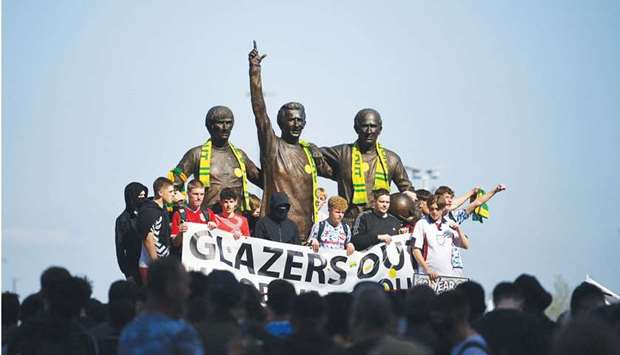
Supporters protest against Manchester United’s owners outside the club’s Old Trafford stadium in Manchester, north west England, yesterday. (AFP)