


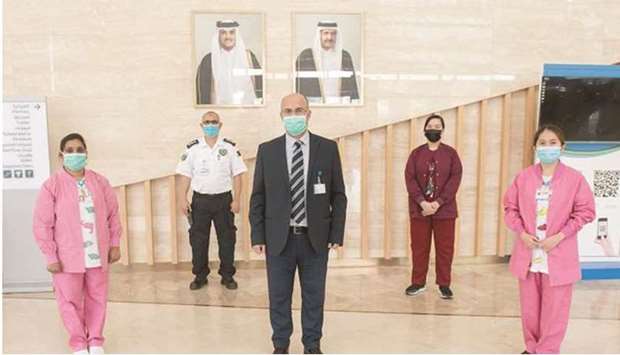
The objective of the high acuity transportation service is to safely transport high-risk preterm babies born in other public or private hospitals to WWRC for urgent specialist care.
The Qatar Neonatal Transport Programme, the first-of-its-kind nationwide emergency transportation service in the Middle East, since its launch in 2015, has safely transported over 950 neonates from different public and private healthcare facilities in Qatar and from other countries within the region for tertiary level care at the Women’s Wellness and Research Centre (WWRC) as well as abroad.
The objective of the high acuity transportation service, initiated to improve care for newborns in the country, was to safely transport high-risk preterm babies born in other public or private hospitals to WWRC for urgent specialist care.
“Since we started the programme six years ago, 956 fragile neonates have been transported between maternity facilities in Qatar. This means between 150 to180 neonates are transported yearly and the number is expected to continue to increase within the coming years.
"The availability of an organised neonatal transport programme is of great benefit to these fragile neonates as it improves their chance of survival and reduces their medical complications,” explained Dr Mai al-Qubaisi, WWRC’s acting director of NICU.
According to her, the statistics gathered over the past six years show that the mortality rate within seven days after transportation of neonates dropped from 3.82% to 1.84% and mortality rate within three days after transportation dropped from 2.39% to 1.23%.
“Looking at 2019 statistics, there were 26,244 births across the country, of which 17,000 births were in WWRC, Qatar’s only tertiary maternity care centre. The remaining 9,244 births took place at private maternity facilities across the country,” noted Dr al-Qubaisi.
She stated that the main role of the neonatal transportation service and programme is to support all babies born across all HMC’s community hospitals as well as private facilities and to centralise neonatal transport services across the country.
“HMC has one tertiary level maternity hospital – Women’s Wellness and Research Centre and three general maternity hospitals — Al Khor Hospital, Al Wakra Hospital and The Cuban Hospital.
"They all receive pregnant women and ensure they safely deliver their babies.
"However, the Qatar Neonatal Transport Programme offers all these general maternity hospitals as well as Sidra Medicine and all major private clinics with birth units a crucial time-saving service to bring any at-risk babies to the specialist treatment available at WWRC as quickly as possible,” said Dr Hilal Amin al-Rifai, WWRC’s acting chief executive officer and medical director.
According to him, WWRC has more than 100 NICU cots for the care of critically ill newborns and the hospital is also equipped with a large Emergency Department with an expanded visitor waiting area, seven operating theatres, 26 labour and delivery rooms, over 240 inpatient rooms and a number of specialised outpatient clinics for Obstetrics and Gynaecology.
Qatar Neonatal Transport Programme director, Dr Fouad Abounahia credits the success of the programme to a fully trained on call round-the-clock NICU team with state-of-the-art equipment stationed within the WWRC’s NICU ready to be deployed within 45 minutes.
“The existence of the Qatar Neonatal Transport Programme and centralisation of neonatal transport services within the country, allow us to deliver tertiary care services to these fragile infants as early as possible and to improve the neonatal interfacility transport process, patients’ outcome and the quality of care of these critically ill newborns.
"Once we receive a call from the referring hospital, the transport team is able to mobilise very quickly,” Dr Abounahia added.
The objective of the high acuity transportation service, initiated to improve care for newborns in the country, was to safely transport high-risk preterm babies born in other public or private hospitals to WWRC for urgent specialist care.
“Since we started the programme six years ago, 956 fragile neonates have been transported between maternity facilities in Qatar. This means between 150 to180 neonates are transported yearly and the number is expected to continue to increase within the coming years.
"The availability of an organised neonatal transport programme is of great benefit to these fragile neonates as it improves their chance of survival and reduces their medical complications,” explained Dr Mai al-Qubaisi, WWRC’s acting director of NICU.
According to her, the statistics gathered over the past six years show that the mortality rate within seven days after transportation of neonates dropped from 3.82% to 1.84% and mortality rate within three days after transportation dropped from 2.39% to 1.23%.
“Looking at 2019 statistics, there were 26,244 births across the country, of which 17,000 births were in WWRC, Qatar’s only tertiary maternity care centre. The remaining 9,244 births took place at private maternity facilities across the country,” noted Dr al-Qubaisi.
She stated that the main role of the neonatal transportation service and programme is to support all babies born across all HMC’s community hospitals as well as private facilities and to centralise neonatal transport services across the country.
“HMC has one tertiary level maternity hospital – Women’s Wellness and Research Centre and three general maternity hospitals — Al Khor Hospital, Al Wakra Hospital and The Cuban Hospital.
"They all receive pregnant women and ensure they safely deliver their babies.
"However, the Qatar Neonatal Transport Programme offers all these general maternity hospitals as well as Sidra Medicine and all major private clinics with birth units a crucial time-saving service to bring any at-risk babies to the specialist treatment available at WWRC as quickly as possible,” said Dr Hilal Amin al-Rifai, WWRC’s acting chief executive officer and medical director.
According to him, WWRC has more than 100 NICU cots for the care of critically ill newborns and the hospital is also equipped with a large Emergency Department with an expanded visitor waiting area, seven operating theatres, 26 labour and delivery rooms, over 240 inpatient rooms and a number of specialised outpatient clinics for Obstetrics and Gynaecology.
Qatar Neonatal Transport Programme director, Dr Fouad Abounahia credits the success of the programme to a fully trained on call round-the-clock NICU team with state-of-the-art equipment stationed within the WWRC’s NICU ready to be deployed within 45 minutes.
“The existence of the Qatar Neonatal Transport Programme and centralisation of neonatal transport services within the country, allow us to deliver tertiary care services to these fragile infants as early as possible and to improve the neonatal interfacility transport process, patients’ outcome and the quality of care of these critically ill newborns.
"Once we receive a call from the referring hospital, the transport team is able to mobilise very quickly,” Dr Abounahia added.