


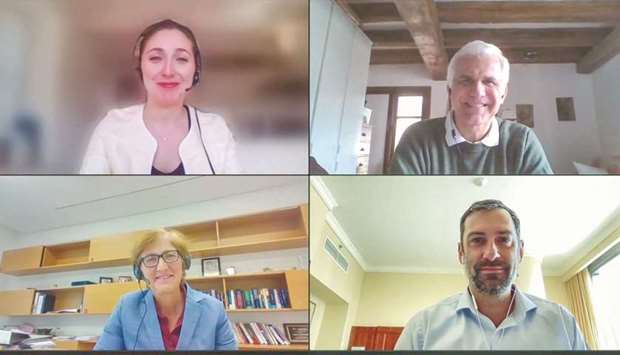
The College of Law at Hamad Bin Khalifa University (HBKU) recently held a webinar titled 'Legal Compliance and Major Sports Events', focusing on international legal standards as they relate to major sports events such as the Olympics, FIFA World Cup and the Asian Games.
The session highlighted how sports, which were traditionally self-regulated, have become subject to intense legal scrutiny. It examined the treaties, rules, regulations and norms that govern prestigious sporting competitions against the background of the broad spectrum of
legal challenges for governing bodies, public agencies, and other stakeholders. The discussion specifically broke down the complexities of regulating anti-corruption, anti-doping and labour rights.
A major theme from the session was the need for transparency, integrity and good governance, both as to the games and the environment in which they are hosted. A second overriding lesson is that major sports events have the potential to build an economic, social and environmental legacy. The session identified the drivers of this legacy.
The panel featured Nicola Bonucci, managing director, Global Trade and Investigations and White Collar Defence, Paul Hastings LLP (Paris) and the previous legal director of the Organisation for Economic Development (OECD); Alix Nasri, technical specialist, Labour
Migration and Employment, International Labour Organisation, Doha; and Dr Zachary Calo, professor at the College of Law, HBKU, who teaches a course on Sports Law.
HBKU College of Law dean Susan L Karamanian chaired the session.
Speaking after the event, Dean Karamanian said: “Major sports events involve many participants and spectators, along with substantial investment, whether from the host city or country as well as the private sector. The issues discussed in the HBKU Law forum, including ones related to procurement, labour reform, sustainability and legacy, are highly relevant to Qatar as it prepares to host the FIFA World Cup 2022 and other major sports events.”