


Plummeting pound
The Lebanese pound has lost around 90% of its value against the dollar on the black market in 18 months of crisis.
While the currency remains officially pegged to the greenback at 1,507 Lebanese pounds, the exchange rate has shot up to around 15,000 on the black market.
Poverty
Some 55% of Lebanese live below the poverty line of $3.84 a day, the United Nations says.
Up to 23% of Lebanese live in extreme poverty, compared with just 8% in 2019.
Inflation
Consumer prices rose by almost 146% during 2020, official statistics show.
Food prices overall rose by more than 400% last year, the World Food Programme says.
The price of a basket of key survival items such as rice, pasta and cooking oil has almost tripled since October 2019, the WFP says.
The price of subsidised bread has risen by 91.5% since May 2020, as the cash-strapped government has gradually increased the price of a large packet of flatbread while also diminishing its weight.
The price of meat has increased by 110% over the past year, while the cost of chicken has risen by 65%, the World Bank says.
Median salary
Before the economic crisis broke in 2019, the median salary in Lebanon was more than 950,000 Lebanese pounds, official statistics show.
While that salary was worth around $630 dollars before the crisis, its value on the black market on Tuesday was just $63.
Unemployment
In late 2020, unemployment stood at 39.5%.
From 2019 to 2020, full-time employment dropped by 40% in the construction sector, while it fell by 31% in the hotel and restaurant sector, the United Nations says.
Aid
A World Bank loan of $246mn is to provide aid to around 786,000 hardest hit Lebanese.
Recession
Lebanon’s gross national product fell by 25% last year, the International Monetary Fund says.
Debt
Public debt reached $95.6bn in late 2020, the country’s third largest lender, Byblos Bank, says.
That is equivalent to 171% of GDP, the International Monetary Fund says.
Foreign currency reserves
On March 15, the central bank had $17.5bn in reserves, its website said, even if analysts have alleged the figure is likely lower. At the end of February 2020, it had stood at $30.3bn, Byblos Bank analysts said, explaining the drop was mainly due to spending on subsidies including wheat and fuel.
Trade deficit
Lebanon’s balance of payments deficit reached $10.2bn by the end of November 2020, almost double that registered a year before, central bank statistics showed, according to a report by top lender Bank Audi.
Electricity
The government has spent $40bn on the power sector since 1992, accounting for 40% of public debt, a report by the American University of Beirut has said. Yet the state utility covers only 63% of electricity demand, which results in rolling blackouts, a December study by the AUB said.
Now just two weeks remain before a nationwide blackout unless emergency funding is secured to buy fuel oil to operate power plants, the caretaker energy minister has warned.
Coronavirus
Even as it battles with economic crisis, Lebanon has recorded at least 418,448 Covid-19 cases since early last year, 5,380 of them fatal.
Port explosion
A massive explosion at Beirut port last year killed more than 200 people and ravaged swathes of the capital. It caused between $6.7bn and $8.1bn in damage and economic losses, the World Bank said.
Refugees
Lebanon’s more than 6mn inhabitants include around 1.5mn Syrians who have fled war in their homeland, of whom almost 1mn have been registered as refugees with the United Nations.
Nine out of 10 Syrian refugee families in Lebanon live in extreme poverty, the UN says. Nearly 180,000 Palestinians also live in Lebanon, according to an official census.
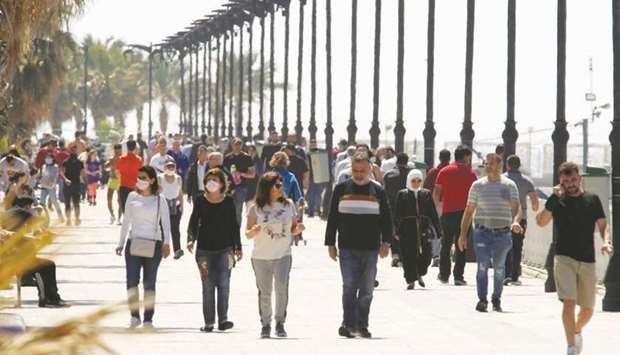
People walk along Beirut’s seaside Corniche amid warnings of a new wave of the coronavirus disease in Beirut on May 10, 2020. Lebanon has recorded at least 418,448 Covid-19 cases since early last year, 5,380 of them fatal.