


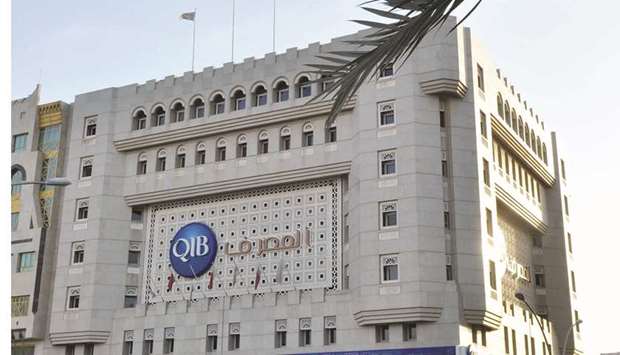
Global credit rating agency Standard & Poor's (S&P) has reaffirmed Qatar Islamic Bank’s (QIB) long and short-term ratings at ‘A-/A-2’ with a "stable" outlook.
The rating agency also upgraded QIB’s stand-alone credit profile (SACP) to ‘bbb’ (adequate) from ‘bbb-’ (moderate).
“QIB displayed good resilience to the economic shock in Qatar in 2020. We expect the Qatari economy will recover mildly in 2021-2022 after shrinking by 4.4% in 2020 due to the pandemic. Despite last year's shock, we expect QIB's asset-quality indicators will deteriorate only slightly,” S&P said.
This is underpinned by the bank's conservative lending approach, it said, expecting non-performing finance's coverage by provisions will remain very high over the next three years.
Based on the bank's resilience to the severe deterioration in its operating environment, S&P has revised its assessment of risk position to “adequate” from “moderate” and the stand-alone credit profile (SACP) to 'bbb' from 'bbb-'.”
S&P expects QIB's capitalisation to continue supporting the bank’s credit profile, and that QIB’s risk-adjusted capital (RAC) ratio will stabilise at 13%-13.5% compared with 13.4% at the end of 2020.
"Despite the current global challenges, this confirms the strong financial position of Qatar, the banking sector outlook and QIB’s financial vigour, which has been steadily improving in line with our long-term strategies and objectives. It is a reaffirmation of QIB’s stability, sustainable business model, high asset quality and robust capital position,” said Bassel Gamal, QIB’s Group chief executive.
The rating report confirmed that QIB will continue to enjoy a robust franchise in Qatar with manageable exposures to external risks in its funding profile. "Our ratings on QIB also reflect our view of the bank's robust corporate banking franchise, favourable position as Qatar's largest Islamic bank and relatively conservative management,” it said.
The bank's funding profile is dominated by core customer deposits (20% of which come from abroad with a good diversification by country).
It has actively tapped the sukuk market over the past few years to lengthen the maturity profile of its liabilities. QIB's stable funding ratio reached 118.8% at year-end 2020 and its liquidity remained adequate with about 9% of assets placed in liquid forms and another 17% mostly in Qatari government sukuk and Qatar Central Bank ‘Murabaha’ at the same date.
On QIB’s "stable" outlook, S&P said it "reflects our view that QIB's business and financial profiles will remain broadly stable over the next 12-24 months despite the pressure on its operating environment."