


Aviation Page - Beyond the Tarmac
Border closures and current flight restrictions in response to the Covid-19 pandemic have resulted in an unprecedented decline in aviation activity around the world.
One in three destinations worldwide are now completely closed to international tourism, latest UN data indicate.
Asia-Pacific has the biggest proportion of total border closures compared to other regions, which according to World Tourism Organisation (UNWTO), accounted for 30 of the some 69 destinations that were fully shut to tourists as of February 1.
Obviously, the emergence of new variants of the Covid-19 virus has prompted many governments to reverse efforts to ease restrictions on travel, with total closures to tourists most prevalent in Asia and the Pacific and Europe.
Many governments have advised their citizens to avoid non-essential travels abroad. The 10 most important source markets, which have such a restriction in place, generated 44% of all international arrivals in 2018, the UN agency says.
As of early February, 32% of all destinations worldwide (69 in total) are completely closed for international tourism.
Of the 69 destinations where borders are completely closed to tourists, 30 are in Asia and the Pacific, 15 in Europe, 11 in Africa, and 10 in the Americas and three in the Middle East.
Of these, around just over half (38 destinations) have been closed for at least 40 weeks, UNWTO’s figures reveal. At the same time, 34% of worldwide destinations are now partially closed to international tourists.
Some 73 destinations (34% of all destinations worldwide) have partially closed their borders.
At the same time, the research also indicates a trend towards adopting a more nuanced, evidence and risk-based approach to implementing travel restrictions.
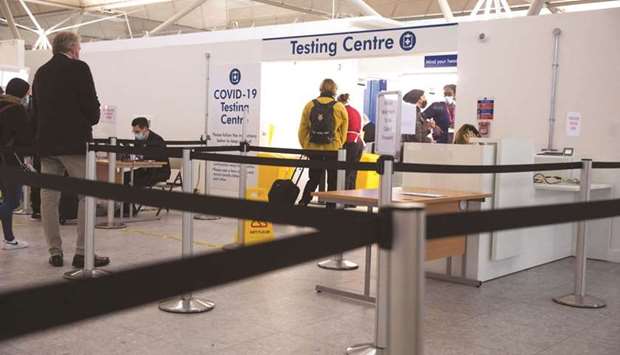
Growing numbers of destinations worldwide now require international tourists to present a negative PCR or antigen test upon arrival and also provide contact details for tracing purposes.
Indeed, 32% of all worldwide destinations (70 destinations) now have the presentation of such tests as their main requirement for international arrivals often combined with quarantine, while the same amount have made tests a secondary or tertiary measure.
Out of these 70 destinations 31% are Small Island Developing States (SIDS) from the Americas (79% of all SIDS in the Americas and 41% of all SIDS worldwide).
Additional 70 destinations request such tests as a secondary or third measure bringing the number of destinations that request PCR or antigen tests to 140 (65% of all destinations worldwide).
An analysis of the top 10 tourism source markets currently advising against non-essential travel abroad found they generated 44% of all international arrivals in 2018.
UNWTO notes that advice issued by governments will play a crucial role in the restart and recovery of tourism in the weeks and months ahead.
“Travel restrictions have been widely used to restrict the spread of the virus. Now, as we work to restart tourism, we must recognise that restrictions are just one part of the solution. Their use must be based on the latest data and analysis and consistently reviewed so as to allow for the safe and responsible restart of a sector upon which many millions of businesses and jobs depend,” noted UNWTO secretary-general Zurab Polilikashvili.
Meanwhile, future travel trends highlighted in a recent IATA survey indicate 57% expect to be travelling within two months of the pandemic being contained (improved from 49% in September 2020).
Of the surveyed, 72% want to travel to see family and friends as soon as possible (improved from 63% in September 2020) while 81% believe that they will be more likely to travel once they are vaccinated.
However, 84% of respondents said they will not travel if there is a chance of quarantine at destination (largely unchanged from 83% in September 2020). 56% believe that they will postpone travel until the economy stabilises (improved from 65% in September 2020).
On travel restrictions, 88% of respondents believe that when opening borders, the right balance must be struck between managing Covid-19 risks and getting the economy going again.
“The top priority of everybody at the moment is staying safe amid the Covid-19 crisis. But it is important that we map a way to being able to re-open borders, manage risks and enable people to get on with their lives. That includes the freedom to travel. It is becoming clear that we will need to learn to live and travel in a world that has Covid-19,” points out Alexandre de Juniac, IATA’s director general and CEO.
Although a poll does not necessarily reflect the real sentiments on the ground, the fact remains that a majority of people want the freedom to travel. Border closures and current flight restrictions mean that freedom may take longer to realise.
But as testing capacity increases and vaccine distribution grows, there is a clear expectation that borders will re-open without quarantine measures. That will probably kick up demand for travel yet again, leading to substantial recovery of a sector, which has been decimated because of the Covid-19 pandemic.
Although travel restrictions are a widely used global measure to limit the spread of Covid-19, these remain a serious challenge for tourism operations to fully recover, given both the wide array of requirements across destinations and the unpredictability of further adjustments.
*Pratap John is Business Editor at Gulf Times. Twitter handle: @PratapJohn