


Qatar Red Crescent Society (QRCS) has said its Little Hearts project is continuing in Indonesia, in co-operation with the Indonesian Red Cross Society (PMI) and Indonesia’s Ministry of Health (MoH).
The $106,560 project is aimed at treating 40 children with congenital heart defects, including ventricular septal defects (VSD) and patent ductus arteriosus (PDA).
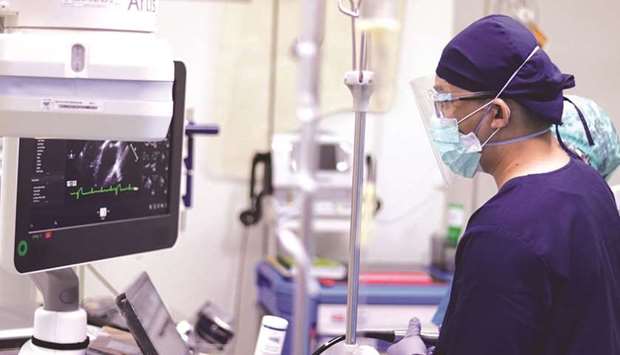
It involves performing catheterisations at the National Cardiac Center Harapan Kita (NCCHK) in Jakarta. So far, 15 children ranging from one month to eight years of age have been operated on the heart, QRCS has said in a statement.
Three groups of 16 specialised doctors and consultants are engaged in the project, covering the specialties of paediatric cardiology, diagnostic non-invasive cardiology and anaesthesia.
The Covid-19 pandemic limited the speed of NCCHK’s interventions. Prior to the interventions, a Covid-19 screening process has to be finalised. The NCCHK put more effort to tighten the Covid-19 protocols, re-disinfected the areas and conducted self-swab tests for both patients and health workers in order to reduce the risks to Covid-19 around the hospital.
At the inauguration ceremony, attended by NCCHK’s board members, PMI secretary-general and team members, the project was commended as rarely implemented in Indonesia, where the numbers of congenital heart diseases (CHD) are increasing. On an average, nine out of 1,000 born-alive infants have CHD, with a total of 40,000 babies, the statement notes.
Being the first Little Hearts project to be executed in Indonesia, it is part of the Medical Convoys programme, which involves providing
treatment for poor patients, performing surgeries in many medical specialisations, supplying the host hospitals with surgical equipment and consumables, and training medical professionals in the latest medical advancements.
It involves performing catheterisations at the National Cardiac Center Harapan Kita (NCCHK) in Jakarta. So far, 15 children ranging from one month to eight years of age have been operated on the heart, QRCS has said in a statement.
Three groups of 16 specialised doctors and consultants are engaged in the project, covering the specialties of paediatric cardiology, diagnostic non-invasive cardiology and anaesthesia.
The Covid-19 pandemic limited the speed of NCCHK’s interventions. Prior to the interventions, a Covid-19 screening process has to be finalised. The NCCHK put more effort to tighten the Covid-19 protocols, re-disinfected the areas and conducted self-swab tests for both patients and health workers in order to reduce the risks to Covid-19 around the hospital.
At the inauguration ceremony, attended by NCCHK’s board members, PMI secretary-general and team members, the project was commended as rarely implemented in Indonesia, where the numbers of congenital heart diseases (CHD) are increasing. On an average, nine out of 1,000 born-alive infants have CHD, with a total of 40,000 babies, the statement notes.
Being the first Little Hearts project to be executed in Indonesia, it is part of the Medical Convoys programme, which involves providing
treatment for poor patients, performing surgeries in many medical specialisations, supplying the host hospitals with surgical equipment and consumables, and training medical professionals in the latest medical advancements.