


Stephen J Adler, editor-in-chief of Reuters for the past decade, said he would retire from the world’s largest international news provider on April 1.
A search for his successor will begin over the next few days, Reuters President Michael Friedenberg said yesterday in a memo to Reuters staff.
During his tenure, Adler expanded the scope and ambition of Reuters’ news offerings, introducing innovations across multiple platforms to serve the news agency’s financial, media and professional clients.
The journalism he championed — impartial and courageous reporting both at speed and in-depth — won global plaudits and hundreds of journalism awards, including seven Pulitzer Prizes.
“We have reported the news with speed, accuracy, fairness and insight in every medium. We have provided unique value to our customers, spoken truth to power, and made the world a better place with our factual and fearless journalism,” Adler said in a memo to the newsroom yesterday announcing his retirement.
Adler, 65, guided the Reuters newsroom through years of financial pressure and intensifying dangers for journalists around the world.
In 2017, two Reuters reporters in Myanmar were arrested and sentenced to seven years in prison. The reporters, who had been working on an investigation into the killing of 10 Rohingya Muslim men and boys by security forces and Buddhist civilians, were set up, arrested and then spent more than 500 days behind bars before they were freed.
Adler advocated publicly for their release, appearing at the United Nations in 2018 with international human rights lawyer Amal Clooney, who had been retained by Reuters to defend the reporters.
Just this week, a Reuters cameraman in Ethiopia was released after police had detained him for 12 days without charges.
“Steve has always cared deeply about journalists,” Friedenberg said. “He has worked tirelessly to secure freedom for journalists in custody or under threat.”
The Reuters president added that Adler has overseen stricter safety standards for journalists, including enhanced hostile-environment training and new mental health programs.
Steve Hasker, president and CEO of Thomson Reuters, which owns Reuters, praised Adler as a “tireless advocate for independent journalism and a champion for press freedom and media literacy.”
Adler also gained attention when he called for a non-partisan approach to US political coverage during the early days of the Trump presidency. In a February 2017 memo, entitled Covering Trump the Reuters Way, Adler instructed Reuters journalists to “operate with calm integrity,” practising the same “intrepid and unbiased” journalism that enabled the news agency to operate in more than 200 locations around the world.
“So what is the Reuters answer? To oppose the administration? To appease it? To boycott its briefings? To use our platform to rally support for the media? All these ideas are out there, and they may be right for some news operations, but they don’t make sense for Reuters,” Adler wrote.
The memo was posted on Reuters.com and was viewed more than 720,000 times. https://reut.rs/38ZpCXa.
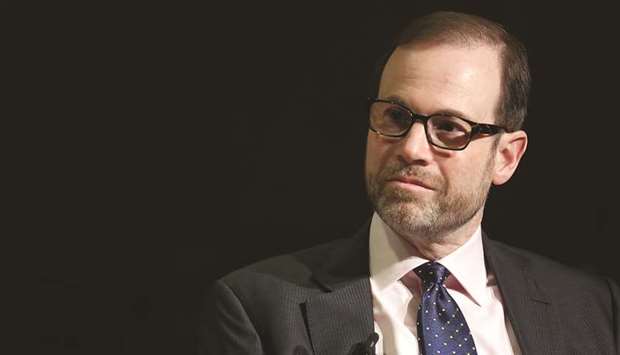
END OF AN ERA: Stephen J Adler