


HE the Minister of Public Health Dr Hanan Mohamed al-Kuwari has said the National Day is a time to remember the efforts made by the ancestors during the time of the Founder Sheikh Jassim bin Mohamed bin Thani when they laid the foundation for establishing a modern state.
Speaking to Qatar News Agency to mark the occasion, the minister said it’s a day to reflect on values such as honour and dignity, and commitment to the country and the wise leadership of His Highness the Amir Sheikh Tamim bin Hamad al-Thani.
Al-Kuwari said one of the key features of the country was the strong solidarity between the citizens and the wise leadership.
She highlighted the remarks made by His Highness the Amir at the 49th session of the Shura Council when he said the identity of Qatar was reflected in the solidarity of the society and the love for their country.
On the ministry’s efforts in containing the coronavirus, she said the directives of His Highness the Amir and support were crucial in overcoming this unprecedented health crisis.
She said Qatar has placed a national Covid-19 response plan that defined a clear set of measures required to recover from the pandemic.
She said the ministry dedicated seven hospitals at the outset of the epidemic to Covid-19 cases. It also expanded the capacity in Hamad Medical Corporation from 2250 beds to 4860 if needed while also
more than tripling the capacity of HMC’s ICU units.
The ministry also established 24 quarantine units that had a capacity of 30,000 beds to ensure the containment of the virus. There were also quarantine facilities that provided 15,000 beds that included hotels and camps.
She noted that healthcare workers were the most vital source in responding to Covid-19, particularly as the capacity increased in April and May.
The ministry’s plan included using the help of private sector workers, adjusting shifts, and creating new jobs among other initiatives.
She said that more than 40,000 employees from different areas of the healthcare system (doctors, support staff, and administrators) worked together as one team.
The Ministry of Public Health also enlisted the community to obtain support through the launch of the “For the Sake of Qatar” campaign, in which members of the public were invited to participate in the implementation of the response plan, by raising awareness, participating in the logistical and clinical activities.
Thousands of community members participated in the volunteering programme, the minister said.
She said the adoption of a wide-ranging testing strategy, by testing more than 1.1mn people, helped in the early detection of cases, adding the process of tracking and tracing contacts contributed to identifying positive cases and speeding up access to them to help break chains of transmission and limit the spread of infection in the society.
She said the ministry designated four health centres belonging to the Primary Health Care Corporation as centres dedicated to conducting (Covid-19) tests, in addition to establishing stations to conduct the test from vehicles in primary healthcare centres in order to enable individuals to perform the tests easily safely.
Al-Kuwari stressed that early detection of positive cases by testing, and contact tracing plays a major role in slowing the spread of the virus, and undergoing medical treatment if needed, all of which contributed to Qatar maintaining one of the lowest death rates in the world.
She also pointed out that HMC has been able to work quickly to enhance the laboratory capacity to ensure its ability to conduct up to 20,000 PCR tests per day — with a daily test rate that is among the highest in the world.
In addition to the central laboratory for Covid-19, it has opened HMC has two new laboratories and four facilities to conduct rapid PCR examinations to support critical and urgent care.
She added the measures proved their effectiveness in monitoring the virus and quarantining thousands of confirmed cases during the peak of the spread.
The ministry also accredited 32 medical facilities in the private sector to carry out the tests.
She said in addition to treating patients suffering from (Covid-19) disease, it was necessary for the healthcare system to continue to provide care for the daily needs of its patients, while ensuring that the risk of infection was minimised for clinical teams and patients, the infection control teams developed protocols to ensure those risks don’t materialise.
She said one of the innovations in that regard was to use phones for medical consultations and remote urgent medical care services and that the launch of the 16000 hotline number helped facilitate the services provided by doctors and care for non-life-threatening cases.
The minister referred to the most prominent achievement the ministry accomplished this year.
She said the ministry along with its partners in the health sector or working on the implementation of the national health strategy 2018-2022, which is part of the wider national development strategy 2018-2022 that works towards realising Qatar National Vision 2030.
Al-Kuwari said the Ministry of Public Health is implementing the strategy in a bid to realise its goal of providing better healthcare to people living in Qatar and meet the need of the current and future generations in that regard.
She noted that the strategy divides the population into seven different categories based on their need for medical care.
It also has five priorities for the healthcare sector to ensure a quality service. She said the focus this year was on implementing the Covid-19 response plan, praising the efforts of the state and its different institutions in containing the virus, highlighting that Qatar has one of the lowest Covid-19 death rates in the world.
Al-Kuwari reviewed the progress made in projects related to the national health strategies.
The minister said that that ministry implemented the initiative of having hospitals that were children-friendly. It also prepared a policy to combat child obesity and another one for obesity.
The ministry also began a programme for mental health in schools.
She said plans for Healthy Women Leading to Healthy Pregnancies saw the ministry prepare guides on artificial insemination and introducing national protocols and guidelines for maternity care, including caesarians.
The ministry also focused in its strategy on providing integrated high-quality maternity services across the various stages of pregnancy, delivery and after delivery.
As for the Healthy and Safe Employees priority populations, the ministry prepared a draft on wellness in the workplace, and another for vocational health.
In the mental health and well-being priority, she said the ministry added 18 beds in Remailah hospital for male adults as part of its comprehensive mental health services.
It also launched awareness campaigns to support mental health during the Covid-19 pandemic.
As for the priority of improving the health of patients in the Multiple Chronic Conditions priority, she said the ministry updated the definition of people with chronic diseases in line with the latest data.
The ministry also prepared a report on empowering diabetes patients in Qatar.
Al-Kuwari hailed the important progress made in the health and well-being for People with Special Needs priority.
The ministry prepared guides to improve early detection, programmes on better inclusion of people with disabilities in society, in addition to dedicating two new facilities dedicated to learning disability.
Progress was also made in the healthy ageing population as the ministry expanded health facilities and established new ones dedicated falls and its implications for the elderly.
The ministry also established a programme for osteoporosis and geriatrics.
The ministry also communicated with members of the society on topics like dementia and protection from falls.
In the system-wide priority of having an integrated model of high quality care and service delivery, the minister said the ministry prepared a draft on ways to evaluate the needs of healthcare services, encourage patients to develop the habit of going to health centers instead of the emergency among other matters.
In the priority of ‘Enhanced Health Promotion and Disease Prevention,’ she added the ministry completed an evaluation of the previous programmes.
The ministry’s plans also include the development of a health literacy framework and a health promotion and screening calendar as well as refine data collection on morbidity and mortality.
The ministry also adopted a framework to combat Salmonella. On the priority to integrate health in all policies, she said the ministry formed a joint committee for health in all policies.
The ministry also prepared legislation related the quality of air and Doha’s commitment to it.
Negotiations with the World Health Organisation (WHO) have also been completed regarding the international network of cities that are elderly-friendly.
She said the Ministry of Public Health remains committed to providing world-class healthcare services in Qatar.
Hamad Medical Corporation was recognised with an Extracorporeal Life Support Organisation (ELSO) award this year,one of many awards healthcare organisations in Qatar received this year.
The Ministry of Public Health also launched Qatar Medical Specialties Certificate (Qatari Board). The new certification programme is an important step to culminate the major efforts to develop the efficiency of medical professionals, through high standards in the evaluation of doctors.
Al-Kuwari said that the ministry continued to expand medical facilities. This year saw the opening of four different hospitals as part of the response to the Covid-19 pandemic.
There were also a number of new facilities opened in existing hospitals, including Daam Center and the short stay unit at the National Center for Cancer Care & Research. The two facilities have a capacity of 68 and 52 beds, respectively.
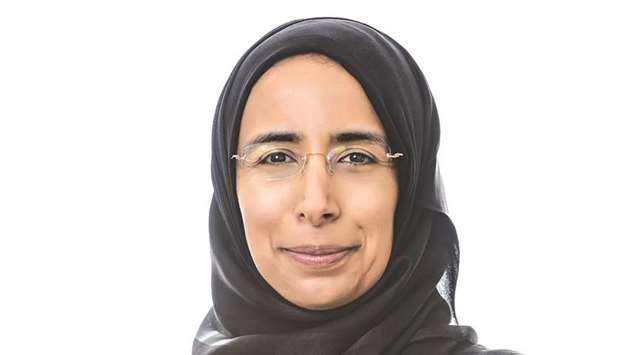
HE the Minister of Public Health Dr Hanan Mohamed al-Kuwari.