


The unrelenting pace of inflows heading for China’s bonds and stocks has one yuan bull predicting the currency could strengthen to a level not seen in nearly three decades.
A “flood” of foreign cash will chase yuan-denominated assets in 2021 because they’ll offer far better yield than the rest of the world, according to Liu Li-gang, chief China economist at Citigroup Inc.
He predicts the currency could rally 10% to 6 per dollar – or even more – by the end of next year. The yuan hasn’t been that strong since late 1993, just before China’s unification of official and market exchange rates triggered a plunge in the currency.
The yuan has been on a tear since late May, surging to a more than two-year high as data showed that China’s economy was rebounding from the virus pandemic. Overseas funds have increased their holdings of onshore bonds and stocks by more than 30% this year to records, official data showed, prompted by index inclusions and the country’s wide interest-rate premium over other markets. To slow the advance, Beijing has made it cheaper for traders to bet against the yuan and has relaxed capital curbs to allow more outflows. But those measures have done little to dampen optimism.
That puts the People’s Bank of China in a policy quandary. It needs to narrow the yuan’s yield premium over the rest of the world to slow the appreciation, as too strong a currency could undermine its push to support an economic rebound that’s reliant on global demand for Chinese exports. Meanwhile, it wants to keep interest rates elevated, as Beijing’s earlier stimulus helped fuel a rapid buildup in leverage, sending an indicator for the country’s debt levels to a record high.
“The problem China faces next year will be huge, unrelenting capital inflow,” Citi’s Liu said. “The yuan’s appreciation will be a key threat to China’s macro economy.”
The Chinese currency has strengthened nearly 10% from this year’s low in late May, making it the second best performer in Asia following the South Korean won. The yuan traded at 6.5460 on Friday.
The yield on China’s 10-year government bonds climbed in recent months on speculation the PBoC will start to exit monetary stimulus. That has helped widen the yuan’s interest-rate advantage over the dollar to the largest on record. Also, the currency is supported by bets that Washington may be less hostile toward Beijing under a Joe Biden administration. A global index compiler’s decision to add some onshore notes in its flagship indexes and a weaker dollar also contributed to the appreciation.
A rapid advance in the yuan could impair Chinese exports by making them more expensive. That will in turn hurt China’s growth, because the nation’s outbound shipments have emerged as a key driver for the economy on global demand for its pandemic-related goods. Also, sustained appreciation in the currency could attract speculative money inflows, fuelling local asset bubbles and creating financial risks.
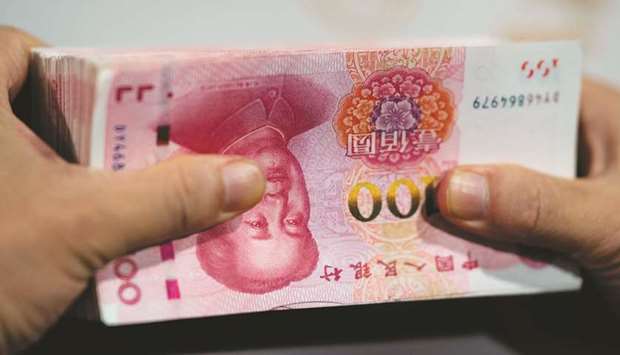
An employee counts out 100 yuan notes at a bank in Shanghai (file). The currency has been on a tear since late May, surging to a more than two-year high as data showed that China’s economy was rebounding from the virus pandemic.