


“On December 10, 1948, the United Nations General Assembly adopted the Universal Declaration of Human Rights (UDHR). Led and drafted by representatives from around the world – including US First Lady Eleanor Roosevelt and Canadian lawyer John Humphrey – this milestone document proclaimed that everyone is born free and equal in dignity and rights. The universality of these rights draws on the work of many scholars, including Dutch jurist Hugo Grotius.
The UN estimates the UDHR is available in more than 500 languages, making it the most translated document in the world. Sadly, however, far too many people around the world are still unaware of their basic rights.
This year, the Covid-19 pandemic has created additional challenges to the global human rights situation. According to the UN, the “Covid-19 crisis has been fuelled by deepening poverty, rising inequalities, structural and entrenched discrimination, and other gaps in human rights protection.” In many countries, governments’ responses to the disease have aggravated inequalities rooted in pre-existing forms of exclusion and discrimination.
Women and children face an increased threat of gender-based violence in homes during lockdowns, and a heightened threat of exploitation and abuse.
Protecting and defending human rights is, however, a shared responsibility.
As we collectively continue to experience the hardship of the Covid-19 pandemic in Canada, the United States, the Netherlands, Qatar, and elsewhere, let us reflect on what we can all do to advance human rights — in our homes, workplaces, schools, digital spaces, and communities.
Globally, all countries should support inclusive responses to the Covid-19 pandemic, recognising that the burdens of the disease are inequitably borne by those already suffering from exclusion, and that the pandemic has increased inequality and marginalisation.
In the spirit of the UDHR, we must ensure that equality and non-discrimination are core requirements for a post-Covid world. This includes standing up for the fundamental freedoms of women, children, and the marginalised around the world.
We are encouraged by the Qatari Government’s resolve and determination in pursuing various initiatives and bolstering human rights during the pandemic by announcing and commencing implementation of important labour reforms, delivering global humanitarian aid, and helping repatriate hundreds of thousands of stranded individuals – including thousands of our citizens.
In particular, we welcome the elimination of legal restrictions on workers’ abilities to change jobs, the removal of exit permit requirements, the introduction of a non-discriminatory minimum wage, and the provision of decent food and accommodation for workers.
We applaud the Ministry of Administrative Development, Labour and Social Affairs and recognise all those who worked diligently on promoting these historic set of reforms, including Qatari citizens and residents, the International Labour Organisation (ILO), and NGOs.
As the world celebrates Human Rights Day, we honour trailblazers like Eleanor Roosevelt and John Humphrey and all those who carry on the important work of protecting and uplifting others, especially during these trying pandemic times.
We hope that years from now, many of us will be able to look back and draw lessons learned from this difficult period on resilience, solidarity, and unity in the face of adversity.
We, as a global community, must continue working together to live up to the principles outlined in the UDHR in order to build a more equal, safe, and fair world for generations to come.
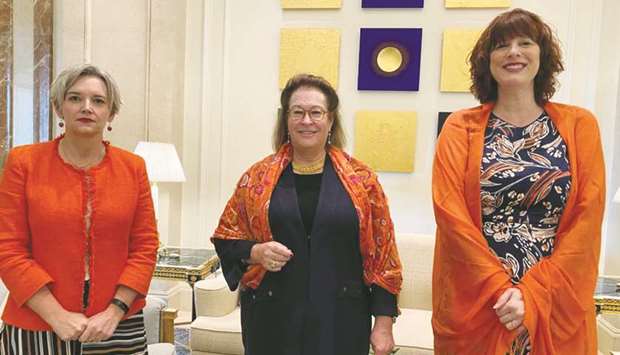
CLARION CALL: US, Canadian and Dutch ambassadors.