


The rate of increase of new coronavirus infections in England appears to be slowing, data suggests, although the death toll is expected to remain high for weeks to come.
The latest estimate for the R number – the number of people each infected person goes on to infect – is between 1.0-1.2 for the UK and 1.1-1.2 for England, down from 1.1-1.3 for both the week before. If R is above 1, the epidemic will grow; below 1 it will eventually fizzle out.
According to the latest figures from the Scientific Advisory Group for Emergencies (Sage), the number of new cases are growing by between 1% and 3% a day in the UK, compared with 2-4% a day the week before.
In other words, while cases are still on the rise, it is spreading more slowly.
The estimates reflect the situation over the preceding couple of weeks, given time lags in the range of data used.
That means the apparent slowdown is unlikely to be down to the latest national lockdown in England, but rather the impact of measures such as tier 3 restrictions – although it is hoped the new lockdown will reduce R in England further.
A mixed picture has emerged in other parts of the UK, with the latest R number for Northern Ireland estimated to likely be below 1, while figures for Wales put R between 1.0 and 1.3.
For Scotland, the R number released on Thursday, was between 0.8 and 1.1.
According to Office for National Statistics data, the percentage of people in the community with Covid-19 in Northern Ireland now appears to have levelled off, but has increased in Wales.
“Positivity rates in Scotland have increased over the last six weeks but it is too early to say that they have levelled off,” the team added.
The findings join other datasets in suggesting the spread of the disease is now slowing across the country, with cases in the UK doubling between 28 and 63 days, although prevalence remains high.
New figures from the ONS reveal that around one in 85 people in the community in England – about 654,000 people – had coronavirus between October 31 to November 6, 2020, with about 47,700 new cases per day – although this does not include cases settings such as universities or care homes.
The previous week the survey suggested 618,700 people, or 1 in 90, had the virus, with a similar number of new cases per day.
However there are reasons for concern.
The new ONS data reveals that the percentage of those testing positive is decreasing in older teens and young adults, and levelling off in other groups under 35 years – although prevalence remains high – but is increasing in older populations, including those most at risk from Covid.
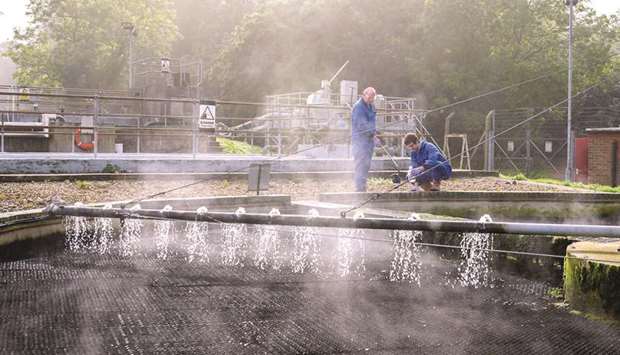
Dr Francis Hassard and Nigel Janes sample partially treated wastewater for the coronavirus disease as part of a study at the Cranfield University Wastewater Treatment Works in Cranfield in Cranfield, Britain.