


Experts from Qatar and abroad will come together on November 15, at 5pm, to participate in a virtual panel discussion titled, “Precision medicine – One Size Doesn’t Fit All”, held as part of the fully virtual World Innovation Summit for Health (WISH) 2020, a component of Qatar Foundation’s mission to foster evidence-based ideas and practices in healthcare.
Taking place from 5-6pm, Doha time, the panel discussion will be accompanied by the launch of a report by the Economist Intelligence Unit (EIU), titled “Doing Well? Fulfilling the Promise of Precision Medicine”. In the report, which is sponsored by Qatar Foundation (QF), EIU discusses the promise of precision medicine; what it is currently delivering; and challenges associated with its wider application in large health systems.
“I think people are now beginning to realise that different groups react very differently, and that’s got to do, to a large degree, with their genetic makeup, which in turn determines how good they are defending themselves against a particular disease,” says, Dr Richard O’Kennedy, vice president, QF Research, Development, and Innovation.
“Through the tremendous research that is ongoing at Qatar Foundation, we are keen on developing the best healthcare possible for our citizens, residents, and the broader world. We are very lucky to have the support for our work in the area of precision medicine. The leadership of Qatar recognise the value of this.”
Over the last decade, the term precision medicine has become a buzzword. It has been the subject of intensive research efforts which has allowed scientists to find some answers but inevitably it has also paved the way for many more questions. Its promising potential to transform the way existing health systems work to become more patient-centric has spread a ripple of excitement throughout healthcare systems.
Despite the mostly positive initial response to its obvious potential, the actual task of delivering precision medicine will not be an easy one.
Health systems are resistant to change, and the nature of precision medicine will require considerable changes in terms of processes, education and infrastructure, which will be no small challenge.
To discuss these challenges and possible solutions, the panel discussion will bring together Dr Victor Dzau – president of the US National Academy of Medicine, Dr Said Ismail – director, Qatar Genome Programme, Dr Walid Qoronfleh – director, Healthcare Research and Policy at WISH, Dr Lotfi Chouchane – professor at Weill Cornell Medicine, and David Humphreys – global head of Health Policy for The Economist Intelligence Unit Healthcare Practice.
The discussion – moderated by Al Jazeera journalist Rawaa Auge – will look at challenges surrounding the integration of precision medicine into existing healthcare systems and possible solutions, while also discussing the panel’s views on how to advance precision medicine initiatives in Qatar and internationally.
The hour-long session will also be used to launch a WISH policy briefing report on precision medicine titled, “The Future of Medicine: Healthcare Innovation through Innovation”. The WISH report takes a Qatar-centric look at developments around the topic under discussion.
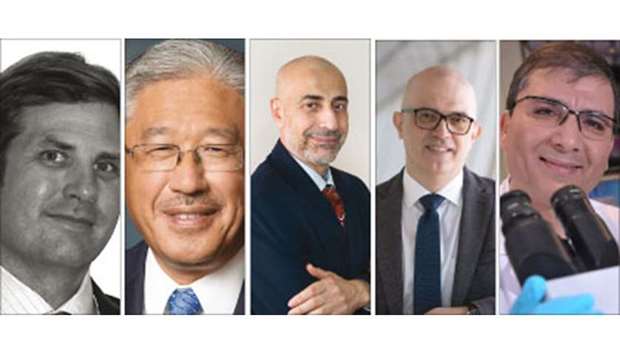
David Humphreys, Dr Victor Dzau, Dr Walid Qoronfleh, Dr Said Ismail and Dr Lotfi Chouchane