


Turkish President Recep Tayyip Erdogan dismissed central bank governor Murat Uysal yesterday and replaced him with ex-finance minister Naci Agbal, acting after a 30% fall in the lira currency’s value this year.
The decision to replace Murat Uysal gives Turkey its fourth central bank governor in five years.
The presidential decree was announced in the early hours on Saturday in Turkey’s Official Gazette and gave no reason for the move.
Analysts said that while Agbal is a close Erdogan ally, he is seen as a capable manager who could take a more orthodox approach to policy.
That could ease concerns that have driven Turks to snap up hard currencies at record levels.
“Uysal’s leadership had been utterly disastrous. Agbal cannot be worse, surely. He had a reputation as a decent technocrat,” Timothy Ash at BlueBay Asset Management said on Twitter. “Agbal is actually qualified for the job.”
Turkey, a G20 country and the largest economy in the Middle East, roared back from a recession last year on the back of surging domestic lending and state support for the lira – until it was hit hard by the Covid-19 pandemic.
Erdogan had appointed then-deputy governor Uysal to head the central bank in July 2019 after sacking predecessor Murat Cetinkaya.
The lira closed at 8.5445 against the dollar on Friday after touching a record low of 8.58, despite dollar weakness amid the uncertainty of the US election outcome.
Agbal had been finance minister from 2015 until 2018, when he was appointed to head the directorate of presidential strategy and budget.
An official from Erdogan’s AK Party said Agbal faces a “difficult test” at his new post but that he is a “strong name” who could help alleviate some of the pressure on the lira.
“We will see a stronger central bank governor,” the official said, adding Agbal “will act smart”.
He is not seen as someone who would accept political direction, the person added. “It is a difficult post, but steps to stop the rapid rise in the exchange rate must be taken.”
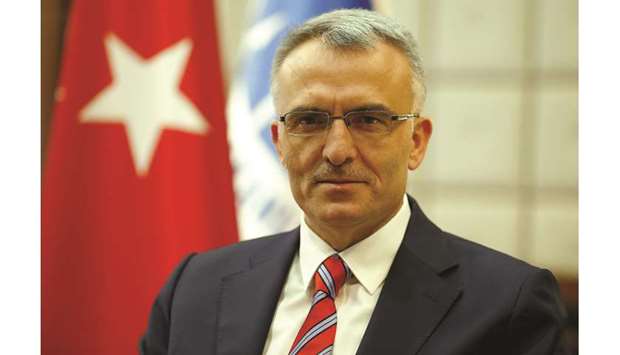
Turkey’s former finance minister Naci Agbal is pictured during an interview with Reuters in Ankara on September 27, 2016. Analysts said Agbal, the newly-appointed central bank governor, is seen as a capable manager who could take a more orthodox approach to policy.