


Reuters/London
Mayor Boris Johnson yesterday urged Olympic dignitaries to take public transport during this summer’s Games rather than chauffeur-driven limousines on specially designated lanes, to help avoid raising the ire of log-jammed Britons.

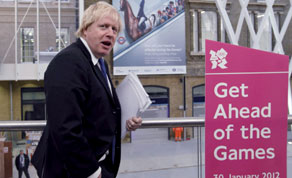
Mayor of London Boris Johnson poses for a photograph at the ‘Get Ahead of the Games - Plan Your Travel in 2012’ event in London yesterday
The Olympic Route Network (ORN), introduced after some athletes failed to arrive for their events in Atlanta 1996, is shaping up as one of the biggest irritants to Londoners who already have to endure long delays on the capital’s narrow streets.
Londoners have also been warned they face queues of up to 30 minutes on the underground rail network at certain “hotspots” during peak times.
“I urge them (members of the International Olympic Committee) to do the sensible thing, do the right thing, get on the Jubilee Line. They’ll love it,” said Johnson, a keen cyclist who faces a re-election battle in May.
Transport officials, confident the system will cope with the expected additional 3mn journeys on peak days, launched a ‘Get Ahead of the Games’ campaign yesterday to raise awareness among the public about potential overcrowding and to help plan journeys.
A website (www.getaheadofthegames.com) and Twitter will provide up-to-date information and tips on how to dodge congested areas. One piece of advice was for commuters to delay their journeys home at peak hours by lingering in a pub.
“You don’t need to sit under the kitchen table with a tin hat on, with tins of baked beans for six weeks, you can go around the City and have a fantastic time,” said London’s Transport Commissioner Peter Hendy.
But the launch came on the same day workers on London’s Underground rail network turned down an improved Olympic bonus offer, raising fears services could be disrupted. Transport for London (TfL) has already liaised with big business on how they can prepare and adapt for the Games, such as encouraging staff to work from home or change their hours, use teleconferencing, take holidays, and adjust delivery patterns.
Officials say the special routes network is vital for getting athletes to the stadiums on time. Tanni Grey-Thompson, one of Britain’s most successful Paralympians, told reporters it took her 30 minutes to stop a bus driver in Atlanta from going the wrong way.
About 82,000 athletes, officials, media, sponsors and VIPs, will use the 109-mile ORN, which will also be open to general traffic except in certain areas. A third of the network will be made up of the more restrictive Games Lanes with fines for those who breach the painted lines.
Transport officials said sports fans and commuters will benefit from a £6.5bn transport investment programme, including an upgrade to Stratford station, the main gateway to the Olympic Park in east London.