


The SIBOS event is happening this week digitally. The theme of the summit is ‘driving the evolution of smart finance’. It will mainly encompass discussions on how the financial industry can make better decisions and run smarter businesses, while optimising technology and data. The digital revolution will pave the way for smart finance.
Financial institutions worldwide are realising that they need to focus on a different sort of innovation, better technology, modernise infrastructure and improve customer experience. The banking business models are changing globally from being old traditional branch business to highly advanced automated customer centric experience for performing day to day banking activities.
Fintech, Internet of things, block chain and artificial intelligence are some of the major technological developments. Robotics, enabled by artificial intelligence and machine learning, is proving to be a game changer that can bring unique operational efficiencies to the financial services industry. Business model innovation is the process, as well as the result, a change of business model can be different radically.
Even minor changes can be of great benefit to customers and businesses. It is often necessary to generate value from a radical product innovation.
The interconnected sub themes at this event include “Delivering digital value, Responsible innovation, Banking for humanity and the future of finance.” On “Delivery digital value, the right approach to leveraging emerging technologies depends on your starting point. Incumbent players in mature markets face different challenges from those who have played technology leapfrog.
There are lessons to be learnt from fintechs and bigtechs in terms of DevOps agility, client responsiveness and collaborative technologies. This session is expected to address the opportunities and risks, from the payments sector – where innovation is making real-time transactions flexible, frictionless, predictable, transparent and secure – to securities trading, FX and beyond.
On “Responsible innovation”, it can deliver positive outcomes across the financial sector, including greater transparency, increased competition and lower prices. Intelligent data and APIs have the power to deliver targeted, streamlined and more efficient services, allowing third parties increased access and connectivity.
However, they also bring into focus potential threats around misuse of information, consent and cyber risk. This session is expected to explore how the industry can maintain a balanced approach to innovation that allows fresh ideas to flourish, while protecting against downside risks.
On “the Banking for humanity”, the session is expected to examine the role of the finance industry in supporting clients’ transition to a low-carbon and sustainable economy, through incentives, innovation and investment opportunities.
It will also explore the role of digital technology in developing financial services that change lives and workspaces, and the growing importance of diversity and staff motivation, recognising that smart ideas stem from a welcoming and inclusive environment.
On “the future of finance”, the session is expected to examine the industry’s role in wider society, addressing global issues such as inequality, pandemics and climate change.
Will more agile and technologically fluid challengers overtake traditional banking systems and market infrastructures? For many, global financialisation of economies has driven greater inequalities in developed countries, and environmentally disastrous growth in the developing world.
SIBOS is also expected to cover sustainability in their sessions. It is committed to reduce its environmental impact and drive positive change in the world. It follows reforestation campaign, reduce waste and promote sustainable sourcing and offer more sustainable food choices.
*Dr R Seetharaman is Group CEO of Doha Bank.
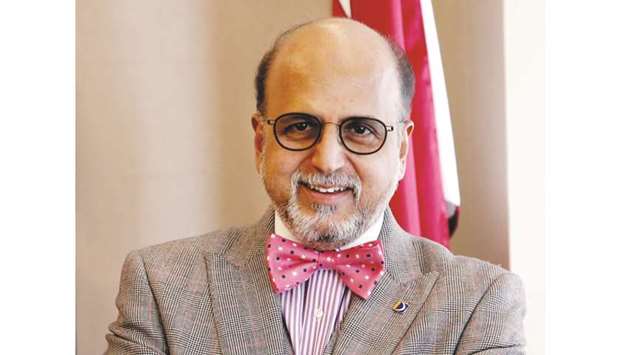
Dr R Seetharaman