


Reuters/Dublin
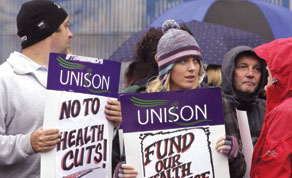
Thousands of Northern Ireland nurses and health workers staged their first strike for more than 30 years yesterday in a protest against funding cuts that the British province’s first minister described as futile.

Demonstrators protest outside the Royal Victoria Hospital in Belfast yesterday
The Unison trade union said it had a very good response from its 26,000 health service members with workers from all levels except doctors forming picket lines outside hospitals, forcing the cancellation of operations and
appointments.
The strike was in protest at a four-year, £2.3bn programme of cuts ordered by ministers in Northern Ireland’s executive, prompted by cuts in grants from the London government which controls Belfast’s purse strings.
Some Unison members in the education sector, which is facing cuts of £300mn over the next four years, also took strike action that hit school meals and support services.
“I don’t think anybody believes - not even the trade unionists who are pushing this forward - that it is going to make one bit of difference. It is not going to put one more penny on the table, so there is a futility about it,” Northern Ireland First Minister Peter Robinson said in a statement. “Does anybody think that (Prime Minister) David Cameron or (Deputy Prime Minister) Nick Clegg are shaking in their shoes because the health workers or education workers are striking for a day in Northern Ireland? I think
not.”
Belfast’s department of heath said the strike had been well supported and that some 2,500 operations and out-patient appointments had been cancelled because of the action.
The strike is likely to be the first of a wave by public servants in the coming months. Health workers are expected to join Britain-wide action due to start on November 30 and teaching unions are currently balloting on their own industrial action over cuts and changes on pensions.