


Governments and monetary authorities must continue to stabilise financial markets by continuing to inject much-needed liquidity to address Covid-19. In handling the Covid-19 crisis and to ensure that adequate finance is channelled to support progress on the Sustainable Development Goals (SDGs) and those most in need countries need a co-ordinated stimulus package, which includes reversing the decline in aid.
In March 2020, the Monetary Authority of Singapore, which uses the exchange rate as its main policy tool rather than a benchmark interest rate, recentred the currency band downwards and reduced the slope to zero. The Singapore dollar rose against the US dollar following the MAS announcement. In May 2020, Singapore announced another SGD 33bn supplementary budget, aimed primarily at helping workers and business tide over the Covid-19 crisis. In March 2020, Reserve Bank of India slashed policy repo rate – the rate at which RBI lends short term money to banks – by a massive 75 basis points to 4.40% from 5.15% earlier, keeping in view the current lockdown situation to combat the spread of Covid-19. In May 2020, the RBI reduced the key policy rate by 40 basis points, bringing it down to a historic low of 4 %. India came with over 20 lakh crore Atmanirbhar Bharat Package to handle the Covid-19 crisis.
In July 2020, the Bangladesh Central Bank unveiled an expansionary monetary policy, lowering borrowing costs through slashing different policy rates to boost money flow to make a turnaround in the corona-ravaged economy.
It reduced the repurchase rate by 50 basis points to 4.75% from 5.25%, reverse repo rate by 75 basis points to 4% from 4.75%.It also reduced the bank rate from 5% to 4% in the yearly monetary policy framed for the current fiscal year.
According to UNCTAD, The coronavirus crisis is pushing critical economic, social and environmental development targets beyond reach. The organisation’s online annual update tracking progress on a range of indicators of the UN’s Sustainable Development Goals (SDGs) shows that poverty, inequality, the climate crisis, unsustainable production and other pressing challenges require even more urgent action due to Covid-19. For instance, SDG target 17.11 aims to significantly increase the exports of developing countries, and in particular to double the share of least developed countries (LDCs) in global exports by 2020. Although LDCs had been achieving modest growth in market share, Covid-19 has likely pushed the target beyond reach.
The coronavirus-induced record-breaking fall of 5% in carbon dioxide emissions – compared with the same period in 2019 – will not be enough to achieve even the weakest of the targets set out by the Paris Agreement on climate change.
Covid-19 has exposed weaknesses in global food supply chains. The Covid-19 crisis could push half a billion people back into poverty. SDG 1 is the bedrock of the goals. The crisis has made this goal more challenging, but also presents an opportunity to completely revolutionise development. UNDP estimates 86% of primary school children in developing countries are not being educated. The pandemic has re-emphasised the ‘digital divide’ and the right to Internet access, particularly for those in rural areas.
The ILO reports that more than one in six young people have lost their jobs since the pandemic began and those that are still at work have seen their hours reduced.
The SDGs are a roadmap for human prosperity. They encompass almost every aspect of human and planetary well-being and, if met, will provide a stable and prosperous life for every person and ensure the health of the planet.
But the pandemic also shows us the wisdom of what is already inherent in the SDGs; the challenges we face cannot be dealt with in isolation.
* Dr R Seetharaman is Group CEO of Doha Bank.
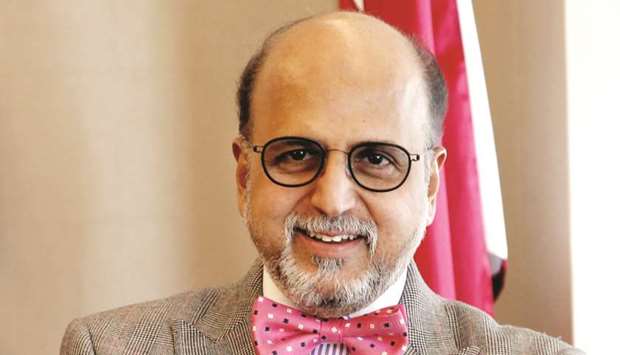
Dr R Seetharaman