


Indian stocks slipped yesterday, halting a six-day rally, after the government said troops clashed with Chinese soldiers along the disputed Himalayan border. Still, the main equity gauge capped a third straight monthly gain.
Volatility surged as the S&P BSE Sensex slid 2.1%, the most since May 18, to close at 38,628.29 points after having advanced 1.4% earlier in the day. The NSE Nifty 50 Index ended 2.2% lower. Sentiment was also impacted due to a decision by India’s market regulator to not extend the September 1 deadline for implementing new rules on margin pledge. Brokers who don’t comply with them from Tuesday will be penalised.
Despite the losses, the Sensex ended August with a 2.7% gain, adding to its 16% surge over the previous two months. Foreign funds have bought a net $6.4bn of Indian shares this month through Aug. 27, set to be the biggest monthly purchase in a decade.
“The market was in the overbought zone,” said Rahul Sharma, head of research at Mumbai-based Equity99 Advisors. “Geopolitical tensions and the new margin rule requirements from tomorrow provided a reason to sell. Brokers were overactive today to align with the new rules.”
India’s two main equity indexes have been closing in on record-high levels touched in January after rebounding from a coronavirus-induced sell off in March, even as the nation faces its worst ever quarterly contraction in gross domestic product due to disruptions caused by lockdowns. The economic scorecard is scheduled after markets close today.
Along with the economic malaise, coronavirus infections continue to soar, with the South Asian nation reaching a global record for daily cases. Still, almost two-thirds of Nifty 50 index-members that have reported quarterly earnings this season have posted results that met or exceeded analyst estimates.
The yield on India’s 10-year government bonds fell three basis points to 6.12%, with the securities capping their worst monthly decline in more than two years. The rupee weakened 0.3% to 73.62 per US dollar.
All 19 sectoral indexes compiled by BSE Ltd fell, led by a gauge of realty stocks.
Reliance Industries contributed the most to the Sensex decline; the nation’s most-valuable company said it is buying assets of debt-strapped rival Future Group for Rs247.1bn ($3.4bn). Sun Pharmaceutical Industries Ltd had the largest drop, falling 6.7%.
Meanwhile the rupee gave up early gains and fell sharply against the US dollar amid fresh border tensions with China. India said that Chinese troops on the night of 29/30 August 2020 violated the previous consensus arrived at during military and diplomatic engagements during the ongoing standoff in Eastern Ladakh and carried out provocative military movements to change the status quo.
“Indian troops pre-empted this PLA activity on the Southern Bank of Pangong Tso Lake, undertook measures to strengthen our positions and thwart Chinese intentions to unilaterally change facts on ground,” the government said.
The partially convertible rupee closed at 73.62, much weaker than the 73.24 level hit earlier in the session – its strongest since March 5. The rupee had closed at 73.40 in the previous session.
On Friday, the rupee ended at its strongest level against the US Dollar since March amid broad USD weakness, month-end exporter selling and absence of nationalised banks from bid, say analysts.
Earlier in the day, the rupee gained tracking losses in the dollar and a rise in Asian peers. The dollar was poised to register its fourth straight monthly drop in August.
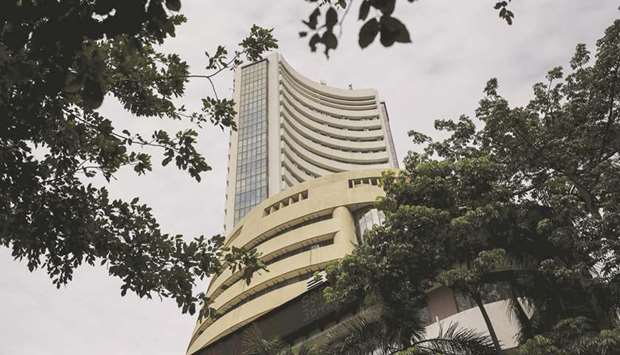
The Bombay Stock Exchange building in Mumbai. The Sensex closed down 2.1% to 38,628.29 points yesterday after having advanced 1.4% earlier.