


Reuters/London
Unions representing millions of British workers gave notice yesterday of ballots on a series of one-day national strikes this autumn if the government fails to properly negotiate on higher contributions for public sector pensions.

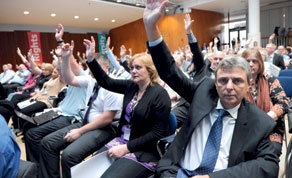
Unison general secretary Dave Prentis (front right) votes during the third day of the annual Trade Union Congress (TUC) in central London yesterday
The country’s three biggest unions, Unite, Unison and the GMB joined forces to say they would immediately consult members about co-ordinated action in November, threatening the biggest strikes in decades.
Dates for the walkouts are still to be decided upon, union sources said.
Unions are locked in a bitter row with the Conservative-led coalition government over controversial plans to raise public-sector pension contributions as cuts bite.
Ministers say pensions are no longer affordable as people are living longer, and the government is seeking to raise contributions by 3% from April next year to save more than £1bn in 2012-13.
Unions say the rises amount to an unfair tax on workers at a time of pay freezes and job losses across the public sector as the coalition intensifies its programme of cuts.
Talks have been going on for several months but some unions accuse the government of presenting them with a done deal and refusing to budge.
Some 300,000 civil servants and teachers staged a one-day strike in June over the issue.
Prime Minister David Cameron’s office called the ballot decisions irresponsible and “very disappointing”.
“The best way forward is to continue with talks. We should try to have a constructive dialogue with the unions. Clearly, we don’t agree with their decision,” a spokesman said.
The opposition Labour party, largely funded by the unions, urged both sides to pull back from confrontation.
“On a day when unemployment has hit 2.5mn and more than one in five young people are out of work, I urge all sides to step back from a confrontation that will further harm the economy and make life tougher still for millions of British families,” said Labour Treasury spokeswoman Angela Eagle.
Dave Prentis, head of the second largest union, Unison, said he was notifying 9,000 employers that 1.1mn members would vote on industrial action.
He said the ballot was “unprecedented in scale” and would cover millions of workers in health, local government, schools, universities, the police and the private sector.
“It’s a decision we don’t take lightly. And the stakes are high. Higher than ever before. Now is the time to make our stand,” he told delegates on the final day of a conference organised by the Trades Union Congress (TUC) in London.
The TUC is an umbrella labour organisation made up of 58 unions representing almost 6.5mn workers — a quarter of Britain’s work force.
The strike plans were backed by TUC chief, Brendan Barber, who has continually stressed the need for negotiation and believes strikes should only be used as a last resort.