


 |
|
|
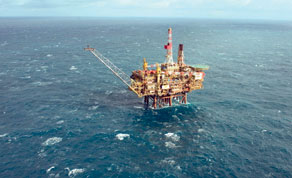
Royal Dutch Shell Plc was silent yesterday on the status of an oil leak of unspecified size in the North Sea and authorities said they had no information on whether the leak had been stemmed, provoking anger from environmentalists.
The Anglo Dutch oil major said on Friday that it had discovered the leak from a flow line at its Gannet Alpha Platform and said then it was working to stem the flow.
The company declined to comment yesterday.
A spokeswoman for the Maritime & Coastguard Agency said it had no information on the status of the clean-up operation and that none of its staff were at the spill site.
A spokeswoman for the Department for Energy and Climate Change said it was not involved and referred questions to Shell.
Scotland’s First Minister Alex Salmond said the amount of oil released was “pretty limited” but the government took all such incidents seriously because of the “huge importance of the magnificent marine environment that surrounds Scotland”.
He said he was pleased with the way the operation was going to contain the leak, but an investigation would follow to establish its cause.
“I think we should put things into context,” he told BBC television. “We are probably dealing with a leak here of 100 tonnes or so of oil, I mean, if you take the Gulf of Mexico, that was half a million tonnes, but nonetheless, any leak at all, even a pipeline leak, is a serious matter.”
Environmental group Greenpeace’s oil campaigner Ben Ayliffe said: “Right now we don’t know how serious this is, what we do know is that the North Sea is supposed to be ultra-safe, we’re told spills can’t happen there.”
Shell said on Friday that one of the wells at the Gannet oil-field, 180km east of Aberdeen, had been closed but declined to say if output was reduced.
According to Argus Media, the Gannet field produced about 13,500 barrels of oil in January-April. The field is co-owned with US major Exxon and operated by Shell. A document available from Shell’s website says the Gannet facilities have capacity to export 88,000 barrels of crude oil per day.
The leak was discovered Wednesday after an oil sheen was spotted on the surface.
A clean-up vessel and spotter plane have been sent to the scene. Shell said it was not immediately clear how much oil had spilt into the sea.
“We deployed a remote-operated vehicle to check for a subsea leak after a light sheen was noticed in the area.
“We have stemmed the leak significantly and we are taking further measures to isolate it. The subsea well has been shut in, and the flow line is being de-pressurised.”
Shell said their focus was on environmental safety and they had informed the relevant British authorities.
A spokesman for Britain’s Department of Energy and Climate Change said: “We are responding to the incident and will investigate in accordance with our investigations policy.
“We understand from Shell that there is a finite amount of oil that can be released.”
A spokeswoman for the devolved Scottish government said Marine Scotland, the body wich manages Scotland’s waters, was in close contact with key organisations involved, including Shell.
“We will continue to monitor the situation and update ministers,” she said.
North Sea oil production is a major industry in Scotland, centred on Aberdeen.
As Britain battles to rein in its record deficit and revive growth, it is a key sector being relied upon by the Treasury.
In March, Britain raised the rate of tax on companies operating in the North Sea to enable lower petrol prices for motorists hit by soaring oil costs.
The charge levied on oil and gas production went up from 20% to 32%.
Finance minister George Osborne said the move would raise an additional £2bn ($3.3bn) for the state coffers.
Scotland’s Green Party co-leader Patrick Harvie said it was imperative that Shell act “urgently and efficiently” in light of the Gulf of Mexico oil spill.
“They must also keep the public and the authorities properly informed about progress, something BP failed to do during the Gulf of Mexico disaster last year,” he said. “Whatever the outcome of this incident, it certainly underlines the need for the oil industry to publish proper response plans.
“If they refuse to do so, ministers should act to make it a condition of their licences.”