


Reuters/London
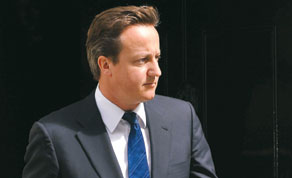
Prime Minister David Cameron yesterday said “a fightback is under way” to restore law and order to Britain’s streets despite rioting, looting and arson by gangs of youths spreading from London to other cities.

David Cameron
Youths fought running battles with police in the northern cities of Manchester and Liverpool as well as in the Midlands overnight Tuesday.
They smashed shop windows, carted off televisions and designer clothes, and torched buildings as police armed with shields and batons struggled to contain the disturbances.
A boosted police presence meant London itself - an international financial centre and host of next summer’s Olympic Games - was relatively quiet after three days of violent unrest that raised questions about the divided state of modern Britain.
About 16,000 policemen patrolled London’s streets on Tuesday night.
Shops, pubs and businesses in many areas closed early after boarding up windows and the capital had the air of a city under siege.
“We needed a fightback and a fightback is under way,” Cameron said after a meeting yesterday of the government’s COBRA committee that deals with national security crises.
“Whatever resources police need they will get.” This included baton rounds and water cannon, Cameron said.
The prime minister branded the unrest, which erupted in poor, inner-city areas of London at the weekend, as nothing more than criminality.
He made no reference to social and economic conditions which community leaders say sparked the problems.
The initial trouble followed the death of an Afro-Caribbean man in north London from a gunshot wound after an incident involving armed police.
“There are pockets of our society that are not just broken but frankly sick,” said Cameron, who made fixing “broken Britain” a cornerstone of his premiership.
The spread of the unrest to other cities including Birmingham, Britain’s second biggest, means the crisis is anything but over.
Gangs of youths in hooded tops battled police in Manchester, smashing windows and looting shops, and setting fire to a clothes shop.
In nearby Salford, rioters threw bricks at police and set fire to shops and cars. “These people have nothing to protest against,” Greater Manchester’s assistant chief constable Gary Shewan said. “It is, pure and simple, acts of criminal behaviour.”
In the port city of Liverpool, rioters attacked two fire engines and a fire officer’s car, police said. Some 200 youths throwing missiles wrecked and looted shops. Police said they had arrested 113 people in Manchester and Salford, and 50 in Liverpool. Cars were burned and stores looted in West Bromwich and Wolverhampton in central England; and in Nottingham a gang set fire to a police station.
The police - already facing manpower losses due to public spending cuts - are at full stretch. With thousands of reinforcements sent from regional forces to London, other cities might find their own police ranks depleted.
In Birmingham, police launched a murder inquiry after three Muslim men died after being run over by a car in the mayhem there. A friend of the men told BBC radio they had been part of a group of British Asians protecting their area from looters after attending Ramadan prayers at a mosque.
Shopkeepers and residents in London and other cities were reported to be organising vigilante groups to protect their property.
The Muslim Council of Britain condemned the violence and called on its community to remain calm and to support the authorities. It also urged them to help clean up the streets.
Many small shops and businesses in England are run by Muslims of south Asian heritage. The violence has appalled many Britons who have been transfixed by television pictures of rioters attacking individuals and raiding family-owned stores as well as targeting big business.
It has also prompted soul-searching.
Community leaders said the violence in London, the worst for decades in the multi-ethnic capital of 7.8mn people, was rooted in growing disparities in wealth and opportunity.
“This disturbing phenomenon has to be understood as a conflagration of aggression from a socially and economically excluded underclass,” the liberal Independent newspaper said.
“These youths live in the heart of British cities but they do not feel part of them. Far too little has been done by successive generations of politicians and public servants to integrate these individuals into normal society. The fuse for this explosion has been burning down for many years.” The right-wing Daily Telegraph took a harder line. “The thugs must be taught to respect the law the hard way. These riots have shamed the nation and the government must be held to account.”
Critics say government policies of chopping public spending and raising taxes to cut a huge budget deficit have aggravated the plight of urban youth as the economy struggles to grow and unemployment rises.
The awarding of huge bonuses to bankers has become emblematic of a culture of flashy consumption for the elite.
“Everyone’s heard about the police taking bribes, the members of parliament stealing thousands with their expenses. They set the example. It’s time to loot,” a youth in the riot-torn London district of Hackney said.