


Wigan Athletic’s administrators have announced that they have agreed a sale of the club in principle with a preferred bidder that they hope will secure its future. The administrators, Gerald Krasner and Paul Stanley of insolvency practitioners Begbies Traynor, said the preferred bidders could not be named due to a confidentiality agreement, but that the offer was the highest of five they have received.
Krasner said the bid, for the club, DW Stadium and two training grounds, would pay all players and other “football creditors” in full, and a further £1.5mn, representing a quarter of the £6mn the club owes to “non-football creditors.” That £6mn total owed to unsecured, non-football creditors is separate from a £24mn-£25mn loan thought to be owed to the club’s Hong Kong-based owner Au Yeung, which Krasner said he is hoping not to repay at all. Investigations into the circumstances of the club’s sudden collapse into administration are continuing, he said, and Au Yeung has agreed to be interviewed about it this month, via Zoom from Hong Kong.
Au Yeung put Wigan into administration on 1 July, just a week after taking overall control of the club, which he first bought jointly on 4 June for £17.5mn with Stanley Choi, the chairman of the previous owners, International Entertainment Corporation. IEC, a Cayman Islands company listed on the Hong Kong stock exchange that runs a hotel casino in Manila, owned Wigan for 19 months, having bought the club from the previous owner, Dave Whelan, for £15.9mn in November 2018.
When the sale to Choi and Au Yeung was completed, IEC announced that £24mn they had invested in the club to cover players’ wages and losses, which had been converted into a loan, had been repaid in full. It was assumed that Au Yeung had repaid it by replacing that loan with a £24m loan of his own, which the club would still owe. Krasner said that “on the face of it,” the club owes £24mn-£25mn “up the line” of company ownership, but that the administrators are still looking into who precisely it is owed to. Explaining the exclusion of that loan from the £6mn total he said was owed to unsecured creditors, Krasner said: “We are working on a plan not to have to pay it.”
Wigan’s appeal against the 12 point deduction, which is imposed automatically if clubs fall into insolvency, is due to be heard on 31 July. The club is expected to argue it should be waived due to the exceptional, “force majeure” circumstances of the Covid-19 pandemic shutdown. Krasner said the hope of staying in the Championship is crucial to the club’s finances, given the £6mn extra that clubs receive in TV money and “solidarity” payments from the Premier League, compared to clubs in League One. If Wigan stay up by beating Fulham on Wednesday, Krasner said they will drop the appeal.
He described as unjust the EFL’s rules on the appeal, which require a club to pay both its and the EFL’s costs, projected to be £500,000 in total in Wigan’s case, even if it is successful and the 12-point penalty is overturned: “To football supporters everywhere, one day your football club could face this,” Krasner said. “The rules of natural justice tell me that this isn’t right. I don’t blame the Football League; these rules were approved by the football chairmen of clubs in all the divisions and it’s about time the whole situation was looked at to make it a fairer process.”
The rationale for the rule is understood to be that even if a points penalty is overturned, the club is still in insolvency, failing to pay its debts in full, so the EFL – in effect the league’s other clubs – is not willing to incur the legal costs of an appeal.
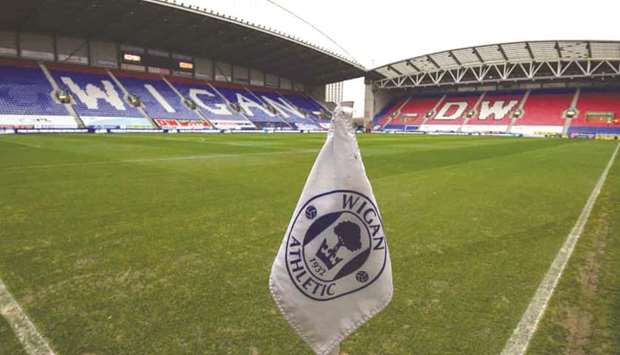
Wigan Athletic were put into administration by Hong Kong-based owner Au Yeung just a week after he took overall control of the club.