


AFP/London

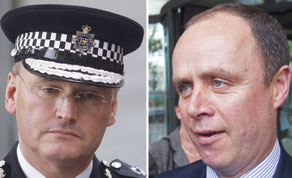
Sir Paul Stephenson and John Yates
The resignation of two of its top officers in less than 24 hours over their failure to tackle Britain’s phone-hacking scandal leaves London’s police force with its biggest crisis in decades. Home Secretary Theresa May yesterday announced a parliamentary review of police corruption and a police inspectorate inquiry after Metropolitan Police commissioner Paul Stephenson and assistant commissioner John Yates stepped down.
The Met has been criticised for its handling of the original 2006 investigation into voicemail hacking at the News of the World tabloid, and a decision by Yates in 2009 not to review the evidence it had.
But more damaging is the question of whether Scotland Yard was too cosy with executives at Rupert Murdoch’s News International, which owned the now-defunct tabloid, and whether some officer received payments from the paper.
“Clearly at the Metropolitan Police the issues have been around whether or not the investigation is being pursued properly,” Prime Minister David Cameron said yesterday.
The Met is running two investigations into the scandal. Operation Weeting is probing allegations of phone hacking, while Operation Elveden is investigating allegations of inappropriate payments to police.
Stephenson, Britain’s top police officer, stepped down on Sunday after two years in charge, becoming the highest-profile figure to quit in the affair. Yates then resigned yesterday.
Stephenson was personally blamed over the force’s employment of former News of the World deputy editor Neil Wallis as a media advisor for 11 months from October 2009. When he quit he said his integrity was “completely intact”.
Wallis, who was arrested last week over hacking claims, also worked for the luxury spa resort which hosted Stephenson for five weeks while he recuperated from operations to remove a pre-cancerous growth.
Stephenson met News International aides 18 times from 2006 to 2010, including eight meetings with Wallis when he was at the paper.
Yates came under fire for deciding, after a brief review, not to reopen the files on the News of the World in 2009 in response to fresh allegations.
The original investigation into phone hacking resulted in two convictions, that of a News of the World journalist and a private investigator, in 2007.
The Met did not consider the case a priority at the time, given the terror threat following the deadly 2005 London bombings, and thought the convictions would send a strong signal to the media industry.
When the probe was reopened in January 2011 after investigative work by the Guardian and New York Times it emerged there were thousands more undiscovered possible hacking victims in amongst the 11,000 pages of documents.