


Reuters/London
 Britain’s opposition Labour party leader is struggling to capitalise on anger over government spending cuts, raising doubts he can revive the battered left before the next parliamentary election in 2015.
Labour, dumped out of power in 2010 with its lowest share of the vote since 1983, enjoyed a bounce in opinion polls late last year as the severity of the Conservative-Liberal Democrat coalition government’s austerity plan began to dawn on voters.
But Ed Miliband, who beat his brother David to take Labour’s helm last year, failed to translate that turnaround into a harvest of votes at closely watched regional elections in May.
The party’s poll lead has since narrowed.
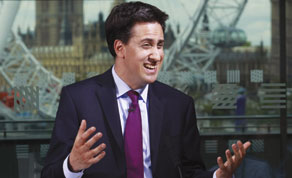
At a press conference yesterday, the 41-year-old former cabinet minister struggled to explain why voters appear unimpressed with him.
“It’s always true for leaders of the opposition early in their time in office that the public are getting to know them,” Miliband said.
“What we’ve succeeded in doing is winning back a section of voters who left us at the last election. You’ve got to recognise that we were coming from a long way back ... We’ve got to show them (voters) we have a compelling view of the future,” he said.
Many Labour activists worry about their leader’s progress but also seem prepared to give him the benefit of the doubt. “We’re in a bit of a holding pattern for now,” said Mark Ferguson, editor of left-wing blog LabourList.
“I still feel that Ed Miliband is good party leader.”
Miliband’s difficulties are partly political, Labour needs time to regroup and rebrand itself before the next election in 2015, but also come down to what analysts describe as potentially irretrievable problems in his personal presentation.
One of his first moves was to launch a wide-ranging policy consultation to find out where Labour went wrong after 13 years in office, a review he hopes will reconnect the party to its roots as well as to middle-ground voters who decide elections.
But Miliband has had little to shout about in the meantime and the spotlight has turned on his awkward style in a political environment where star quality can paper over policy shortcomings.
“People do tend to focus on the fact that his mouth is a bit wonky and he’s adenoidal and he’s got a funny haircut,” said Steven Fielding, a politics professor at the University of Nottingham. “He, as a public figure, is a work in progress but he hasn’t made much of an impact. After a year in the job, he should have learned all the tricks.”
Miliband will hope that four years is long enough to overcome early problems, win round doubters in his own party and restore Labour’s shattered credibility. “If you were a Labour party voter or mandarin (bureaucrat), I’m not quite sure you’d be convinced he is going to make it,” Fielding said.
Miliband described marriage as “an important institution” after his wedding to long-term partner Justine Thornton.
Miliband added he wants cross-party talks to resolve the problem of funding adult social care.
Miliband said he wanted parties to work together so people could “grow old with dignity”.
Prime Minister Cameron said he “thoroughly welcomed” the idea of talks on what was a “very difficult” issue.
“If there is an opportunity for cross-party work on that, I thoroughly welcome it,” the prime minister added.
A commission headed by economist Andrew Dilnot is due to publish a report within the next few weeks on care funding.