


Germany will buy a stake in CureVac AG, a player in the hotly contested race for a coronavirus vaccine, as governments jockey to ensure a supply of any successful pandemic shot.
The state said yesterday it plans to purchase about 23% of Tuebingen, Germany-based CureVac for €300mn ($337mn) via development bank Kreditanstalt fuer Wiederaufbau, known as KfW. The announcement comes after speculation flared up in March that the US was angling to buy the company or its technology.
“Germany is not for sale,” Economy Minister Peter Altmaier said at a press conference yesterday. “We aren’t selling off the family silver. I am a great supporter of a global free-market economy, but there are certain areas where our position must be very clear.”
The investment gives the German state a foothold in an unproven but promising area of pharmaceutical development known as messenger RNA, in which the vaccine teaches the body’s cells to identify and attack the virus. CureVac’s experimental product is slightly behind that of frontrunners Moderna Inc of the US and BioNTech SE, a German rival, in terms of potential speed to market.
Germany isn’t the only state moving to secure access to a potential vaccine. France may also announce support for a local project today during a visit to a Sanofi plant. And just days ago UK-based AstraZeneca Plc reached a supply deal for a possible inoculation with four European Union nations, including Germany. The company agreed to make doses first for its home country.
The head of France’s Sanofi, one of the world’s biggest vaccine makers, brought home the need for countries to fund local research and production efforts last month, when he suggested the US may be first in line to get a pandemic shot after it backed its early research.
CureVac is just a small part of a broader strategy for ensuring more European independence and investment, Health Minister Jens Spahn said in an online forum for the German Marshall Fund. “We want to help all other regions of the world, but we need to secure vaccines for us too,” Spahn said, adding that he’s optimistic there could be a vaccine this year.
The economic duress brought by the coronavirus outbreak is also changing the way some governments behave. Germany has used the crisis to take a more activist approach to managing its economy, equipping the WSF Economic Stability Fund with €100bn of taxpayer money to directly invest in and buy out companies.
A CureVac investment marks its second deal after the landmark €9bn bailout of Deutsche Lufthansa AG, in which the government took a 20% stake in the struggling airline.
The move does not require approval from the European Union’s competition authority as CureVac is considered “critical infrastructure,” according to Altmaier. The purpose of the investment is to allow CureVac to build out its mRNA platform, he said.
“We don’t know which company, when, will develop the first available vaccine for this pandemic,” Altmaier said. “But we know one thing: CureVac is at the forefront of this development, and we are proud of this.”
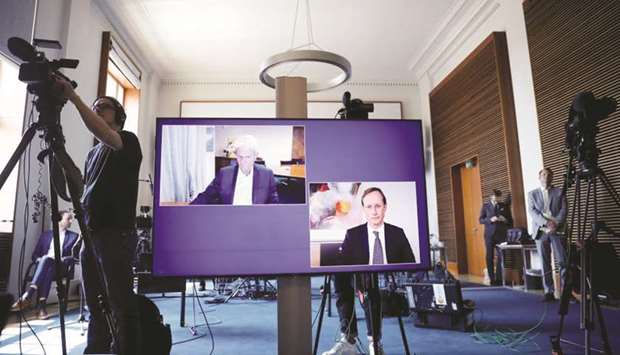
CureVac main shareholder Dietmar Hopp and Acting CEO Franz-Werner are displayed on a screen during a news conference with German Economy Minister Peter Altmaier at the Economic Ministry in Berlin yesterday.