


It was a typical day last week in the federal capital with yet another press conference at the state-run Press Information Department (PID), except that this dissolved into acrimony with a familiar face.
Shahbaz Gill, the Special Assistant to the Prime Minister (SAPM) on Political Communication, had once again lit up a fuse, but with a difference.
This time the target was not an opposition leader on prime time television, but a journalist who had been rubbed Gill the wrong way by asking a question that he found unpalatable.
Gill has been facing a torrid time recently, with questions ranging from the authenticity of his Management and Leadership doctorate, the alleged foreign university employment when he was a spokesperson for the Punjab government, the charges of harassment resulting from a stint as a lecturer at the International Islamic University (IIU) in Islamabad, to a dubious role in the recent minority commission row over the inclusion of a sect constitutionally declared outside the fold of Islam.
He denies the allegations but continued dithering, and a lack of clarity has not only made those stick, but caused no small embarrassment to the ruling Pakistan Tehrik-e-Insaf (PTI) government, which swears by transparency as its pillar of governance.
When the reporter asked the Gill to “come clean” on the allegations during the press conference, Gill parried the question, but later on, sarcastically asked the journalist if he had brought a marriage proposal (in response to the poser on the harassment).
This led to a verbal altercation, but Gill refused to apologise for his provocative remarks.
Gill’s aggressive brand of politics – he does not boast a regular electoral constituency and is a new entrant to the power corridors – has won him few friends.
His lack of grassroots gravitas and brinkmanship is evident in those now-familiar feisty exchanges in talk shows with opposition members, and on the odd occasion, even the talk show host who dare push the hard talk.
The brashness first took flight when Gill was surprisingly appointed as the spokesperson for the chief minister of Punjab, Pakistan’s most populous and powerful province that determines the eventual power matrix thanks to the largest number of parliamentary seats it offers the Electoral College.
Sardar Usman Buzdar, the chief minister, is an unassuming chief executive, and given the rough and cutthroat nature of Pakistani politics, is generally considered too soft for his own good.
Soon enough Gill seized the opportunity to become the “face of the administration” and overshadow his boss in the process.
Buzdar’s consternation aside, the unelected spokesperson’s self-assumed administrative gravitas also led to upheaval within the ranks.
Soon enough Buzdar – handpicked by Prime Minister Imran Khan against more pronounced front-runners to helm the ship in Punjab – complained to his boss.
As a consequence, Gill was shown the door but offered a face-saving resignation, which he took last September.
However, he resurfaced in March this year with an even bigger political pie, when he was appointed to his current position, bringing him in direct contact with the prime minister.
The irony, of course, is his job profile: political communication, where he continues to be a thorn in the side of the opposition but also his own party.
Aslam Khan, a political commentator, who is known for his incisive analysis, appears to give Gill a left-handed compliment for defying the norms.
“It has been a culture with almost every political party in Pakistan (that) merit often takes a back seat where expediency is concerned. He’s your archetypal politician who knows how to climb the ladder and when to profit, scruples be damned.”
So how did Gill manage the impossible after running roughshod in Punjab?
Reportedly, it happened courtesy of the good offices of the influential Naeemul Haq, one of the prime minister’s closest confidantes, who passed away this year after a prolonged battle with cancer.
Reports in the media purported Haq to have stitched the “rapprochement” on his deathbed, and the prime minister felt obliged, agreeing to an “adjustment” without a portfolio at the time.
But what about the claims pertaining to a PhD in Management and Leadership from Malaysia’s University of Malaya, where no such doctorate programme is listed on its website, and the harassment case which led to him being relieved of his services at the IIU?
“Since when have these things stopped political ambition from taking flight if you are connected with the right people at the right time,” Aslam Khan asks, with a hint of cynicism. “Parachuters have made the cut many times in the past, and no matter how much heartburn it causes the more committed and the more seasoned in the party or the party itself, it will happen again.”
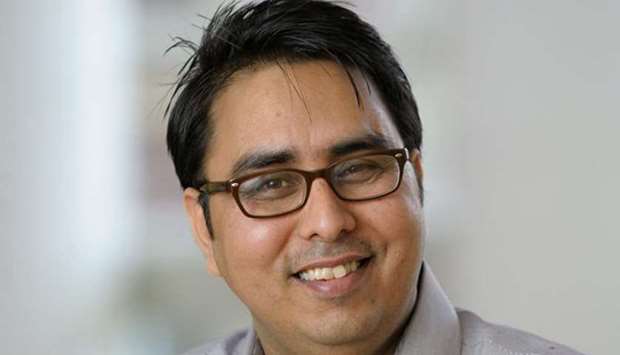
Shahzad Gill, the special assistant to the prime minister on political communication.