* Total number of new beds to increase to about 3,500
Additional clinical capacity will be provided in hospitals over the next two weeks, bringing the total number of new beds provided as part of Qatar’s strategy to face the Covid-19 pandemic to approximately 3,500.
This was revealed by Dr Saad al-Kaabi, chairman of the System Wide Incident Command Committee at Hamad Medical Corporation (HMC), according to a report by the official Qatar News Agency (QNA).
Dr al-Kaabi stressed that there is no lack of beds for patients who need hospitalisation, but members of the society must at the same time continue to act proactively to prevent novel coronavirus infection and prevent its spread.
He explained that there is no shortage of beds for the treatment of Covid-19 patients, whether in critical care units or in the regular wards. Seven facilities have been allocated for the care of Covid-19 patients - the Communicable Disease Center, Hazm Mebaireek General Hospital, The Cuban Hospital, Mesaieed Hospital, Ras Laffan Hospital, Libsear Hospital and a field hospital in the Industrial Area.
He noted that the ability to care for acute and critical cases increased significantly, while enhancing the capabilities of existing hospitals and opening new ones.
He said Qatar is ready to respond to any epidemic scenario and this includes plans for the worst scenarios. However, despite these positive steps, it is still more important than ever that everyone continues to help contain the spread of this virus by staying at home and following infection control measures, he stressed.
This is especially important today, as Qatar is moving to the height of the infection stage and many people may feel tempted to ease their commitment to social distancing measures and gatherings to celebrate Eid al-Fitr, he added.
Dr al-Kaabi referred to the development and implementation of a strategy that ensures the provision of appropriate care at the right time and place. By allocating seven hospitals as treatment facilities designated for Covid-19, the majority of novel coronavirus-infected patients can be kept in a small number of locations, ensuring that there are specialised and trained teams and equipment to treat these patients.
He said the presence of Covid-19 therapeutic facilities also helps ensure that patients who need care but not connected to Covid-19 have access to safe treatment.
Dr al-Kaabi stressed the importance of the community continuing to work hand in hand to help limit the spread of the virus.
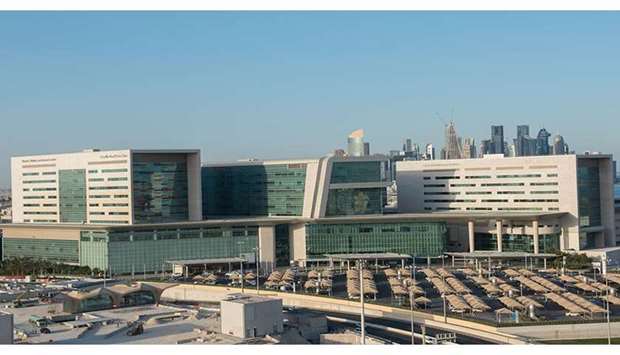
Medical director of the HMC-affiliated Ras Laffan Hospital, Dr Khaled al-Jalham, said the hospital that was officially opened late last month is built on an area of approximately 200,000sqm and includes an underground floor, ground floor and two upper floors. The hospital is a key component of the corporation’s response strategy to Covid-19, he stressed.
The acting chairman of HMC’s Intensive Care Units (ICUs), Dr Ahmed al-Mohamed, noted that there are enough specialised medical facilities and teams to care for Covid-19 patients who need intensive treatment and advanced respiratory support.
He said HMC hospitals dedicated to dealing with Covid-19 have a combined capacity - in ICUs - of approximately 400 beds, which can be increased to 700 beds. There are currently 1,452 people in acute care units and 163 people in intensive care.