



Dr. Ahmad Al Mulla
“Research has revealed that medwakh contain much higher nicotine and tar levels than cigarettes have, despite the widespread belief among many teenagers that medwakh and shisha are safer than cigarettes. Medwakh can cause many of the same diseases as cigarettes cause, including lung cancer, chronic obstructive pulmonary disease (COPD), and coronary artery disease. One medwakh session can be the equivalent of smoking five to ten cigarettes in terms of nicotine intake,” said Dr. Al Mulla.
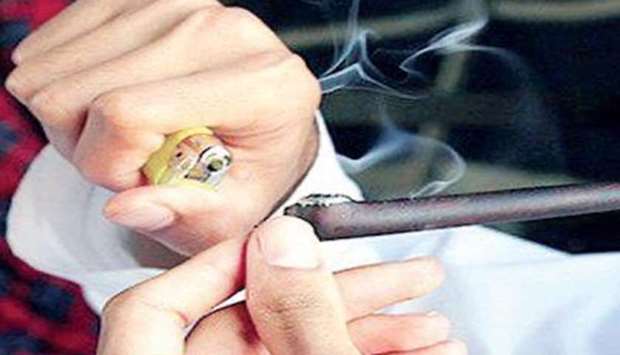
Medwakh is the pipe used to smoke dokha, a tobacco that is usually mixed with herbs and spices. The Arabic name means ‘dizziness’ and a leading cause of the misconception that it is less harmful than cigarettes is because it is considered by some to be natural and without additives. Because medwakh does not leave the odor that cigarettes do, it can create the false belief that it is not a dangerous habit, said Dr. Al Mulla.

Dr. Jamal Abdullah

Dr. Ashour Ibrahim
Dr. Al Mulla said all forms of smoking increase the risk of many diseases, including lung disease, cardiovascular diseases, chronic obstructive pulmonary disease (COPD), kidney disease, and heart disease. Dr. Al Mulla noted that smoking has been linked to more severe Covid-19 illness.
In 2016 Qatar introduced the Tobacco Control Law as part of a campaign designed to urge people to stop consuming tobacco and to encourage them to adopt healthy lifestyles. The law also prohibits advertising or promotion for tobacco products, bans the use of electronic cigarettes, sweika, and other chewing tobacco products, prevents the sale of tobacco products to people under the age of 18, and placing warning pictures on tobacco packages made mandatory.
Dr. Jamal Abdullah, a Smoking Cessation Specialist at HMC, said patients who seek treatment from the Tobacco Control Center receive one-on-one counseling and appropriate nicotine replacement or pharmaceutical support. He says all patients undergo a full assessment, including a complete medical history and related evaluations, such as lung function tests. He says psychological support is also a core part of treatment, as smoking is far more addictive than many drugs, and he noted that some of the treatments provided are not suitable for those under the age of 17years, and therefore, the treatment provided for this age group is mostly based on behavioral therapy and nicotine replacement therapy.
Dr. Ashour Ibrahim, Clinical Psychologist at HMC’s Tobacco Control Center, said peer pressure is one of the most widespread causes cited by young people when asked why they started smoking. He said other factors that contribute to young people picking up the habit of smoking Medwakh include the false sense of independence they might feel, stress relief, and the fact that they can go unnoticed because it doesn’t leave an odor. Dr. Ibrahim concluded that smoking is one of the most dangerous widespread phenomena threatening the health of young people in Qatar and it can affect their learning ability and even lead to behavioral and psychological issues, including stress, anxiety, introversion and depression.
For appointments or more information on the Tobacco Control Center, one may call 4025 4981 or 5080 0959, or contact the Center's hotline at 5573 6025.