


Leaders and managers had scheduled their meetings and were conducting calls with customers or other stakeholders.
Normal, though, not only meant deploying an organisation’s strengths, but to also frequently perpetuate routines and solutions that were in fact weaknesses.
Research has shown that 90% employees across the globe might either lack the right focus at work, the necessary energy, or both. Apparently, only 10% employees approach their tasks with the right concentration on the actual essentials in a sufficiently energised way. And those are the ones who succeed in actively managing distractions.
Another research insight is that the majority of businesses around the world got caught in a certain ‘acceleration trap’. This meant that the projects carried out by them were too many and too diverse and were characterised by a plethora of ideas, e-mails, technological innovations, and market explorations at one point of time and over time. This led to overloading, multi-loading and perpetual loading. Too precious and rare were the moments to take a breather and reflect on the essential – the one thing that would help create the future and an above average impact.
Then countries and organisations around the world were hit by one of the worst catastrophes of all time. And the stock markets crashed in a way that had not been witnessed in the last 90 years.
The International Monetary Fund currently calculates that the damage of the coronavirus pandemic (Covid-19) would amount to USD9tn over time. This is the perfect example of Murphy’s Law – anything that can go wrong will go wrong.
Covid-19 drastically affected global connectivity, flow of goods, information, and capital. Individual and family lives also were badly disrupted. What followed soon after is known among psychologists as threat-rigidity paradigm – responding to threats by putting things on halt, suspending them, in order to regain control of precipitating dynamics.
As matters went out of control, leaders and managers first had to regain a solid understanding of the ‘coronomics’ of how to survive, strive and succeed in this business environment.
There is an alternative to rigidity, and it has been dawning on leaders and managers that it is practically the only way forward. The Covid-19 virus does not shock and disrupt operations only. Today’s adversity can also invite and encourage substantially more reflexivity. Does our strategic success recipe in this organisation still work? Is our current trajectory really the most promising one? When is it time to move beyond exploiting the current strategy, technology, IT, and organisational structure to explore a new one? Do we have a clear idea of what is coming next? Who has what kind of responsibilities in the board, the executive team, as well as the levels below them – and is this truly the perfect division?
With regard to strategy, what ‘blue ocean thinking’ could we add to our leadership behaviours? What should we do more or less of? Which new elements can we create or completely remove as no longer deemed helpful? What are the implications for our organisational culture and energies? Where are the skill gaps to successfully embark on the next trajectory of our solutions?
If done well, reflecting on these questions can lead to strategic clarity about the future, about the very few things, even the one thing, to allocate focus and energy on. The current turbulences in business environments can either lead to more rigidity, and afterwards to attempts to do more of the same, or it can lead to a renewal so that Murphy’s Law cannot strike back anytime soon, in the same way. How leaders and managers respond now to this shock is probably their ultimate test of greatness at this point of time.
Another fashionable vocabulary in companies is the concept of resilience. Portrayed as something positive and desirable, the question is how and how quickly can we bounce back?
While it is essential to confirm just how desirable bouncing back to the past solutions actually is; alternatively, reflecting on the above questions can enable deep thinking and constructive discussions on how to emerge stronger from the crisis than ever before.
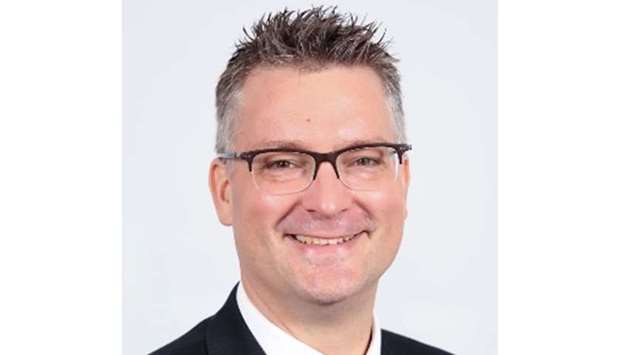
* Professor Dr D.Litt. (hon) Wolfgang Amann graduated from the University of St Gallen in Switzerland with a doctorate in international strategy. He has been designing and delivering executive education seminars and advising senior leaders for more than 22 years. He currently serves as professor of strategy and leadership as well as the academic director of degree, certificate, open enrolment and custom programmes of HEC Paris in Qatar.
About HEC Paris
Founded in 1881 by the Paris Chamber of Commerce and Industry, HEC Paris is one of the world’s leading providers of Executive Education. HEC Paris joined Qatar Foundation in 2010 and brought world-class Executive Education programmes and research activity to Qatar and the GCC region. HEC Paris offers in Qatar a complete and unique range of educational programmes designed for the leaders of tomorrow. In Doha, HEC Paris runs an Executive MBA, a Specialised Master’s Degree in Strategic Business Unit Management, Executive Short Programmes for managers and executives, and Custom-designed programmes for companies. http://www.qatar.exed.hec.edu/