


Key workers and NHS staff have raised concerns about the management of a national network of drive-in coronavirus testing centres, with doctors at one London hospital trust “actively discouraging” staff from using them.
Thousands of people have turned up at more than 30 locations around the UK to be swabbed for traces of the virus, after the government opened up facilities previously reserved for NHS workers to all employees in essential services, including care homes and utilities.
The expansion in testing at the weekend has led to long queues at some facilities, with motorists – many of them already feeling unwell with symptoms of Covid-19 – stuck in their cars in hot weather for hours, forbidden from opening windows and unable to use toilets or find water.
The Guardian was contacted about multiple concerns, including queues of up to five hours, workers with appointments turned away because of delays, leaking test vials, wrongly labelled samples, and lost test results at Nottingham and Wembley.
A doctor at the Royal Free NHS trust, which operates three hospitals in north London, said they were so concerned about the drive-in facility located in the Ikea car park in Wembley that staff had been told not to use it.
The regional network, which will be extended to 50 locations, is a cornerstone of the government’s target of reaching 100,000 tests per day by the end of this week.
Contracts to operate the facilities have been awarded under special pandemic rules, through a fast-track process without open competition. They were handed to private companies including the accountants Deloitte, the public services specialists Serco and Sodexo and the pharmacy chain Boots, which has also trained and provided more than 300 staff to administer swabs.
At Wembley, tests have been lost, with no contact number provided to chase missing results.
The site is operated by Sodexo, but ensuring staff receive results is the responsibility of Deloitte.
The accounting firm is managing logistics and data across most of the test centres, including booking tests, getting samples to the labs and communicating the results.
The Royal Free source said: “All three (of the trust’s) hospitals are actively discouraging people from going there. We have no faith that they would get the result. The chain of command is very opaque and it is very difficult to know how you get your results back. It should be run by people with operational experience of clinical tasks, not by an accountancy firm.”
Instead of using Wembley, the trust is swabbing staff at work and sending the results to Francis Crick Institute laboratories for analysis.
People attending a number of drive-in facilities reported being left with no choice but to take their own swabs, having expected the procedure to be carried out by a trained professional.
James Collins, a carer at a home for vulnerable adults in Lincoln who has been self-isolating with a cough, said he waited for five hours for a test at Robin Hood airport in Doncaster on Saturday after a two-hour round trip to get there.
Collins, who described the experience as “the worst seven hours of my life”, was surprised to be told to swab himself. “I’m scared I haven’t done the test right,” he said after testing negative.
At Doncaster and elsewhere, security guards patrolled the lanes warning motorists not to take photos or videos and not to open their windows.
Drivers could communicate with marshals only by phone, using numbers written on signs.
There were some portable toilets, but after a single use they were sealed, awaiting cleaning.
Motorists waited in three separate queues before being handed their tests.
Serco, which runs nine centres including Doncaster, said the longest recorded wait was two hours”
Anna Whittekind, a nutritionist who has been off work with chest and stomach pains for 12 days over the last month, said she and her husband, who works for the NHS, had waited three hours in the heat at a drive-in facility.
Her result arrived quickly and was negative. “I have no idea whether I managed to take a good enough swab, so it may have all been a waste of time,” she said. “I felt for the poor souls working there, but the organisation was abysmal.”
A worker at the Lighthouse laboratory in Milton Keynes, which was opened by the Health Secretary, Matt Hancock, this month as one of three “megalabs” created to support the testing initiative, said she was concerned about safety and lost results.
She claimed the lab, which is capable of processing up to 10,000 tests in 24 hours, had received hundreds of swabs in vials that either were leaking or were not sealed in two bags as required, meaning the couriers and technicians handling them risked contamination.
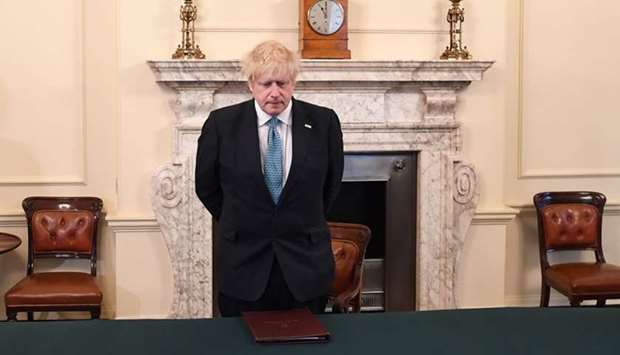
Prime Minister Boris Johnson pauses for a minute’s silence inside 10 Downing Street, central London, to honour key workers, including NHS staff, health and social care workers, who have died during the coronavirus outbreak.