


Mosques stood empty and fast-breaking feasts were cancelled as Muslims around the world began marking Ramadan under coronavirus lockdown yesterday, while a pushback in some countries sparked fears of a surge in infections.
Makkah’s Grand Mosque, was among those devoid of worshippers as the holy month got under way amid unprecedented bans on family gatherings and mass prayers.
A stunning emptiness enveloped the sacred Kaaba in the most potent sign of how the daytime fasting month will be a sombre affair across Muslim-majority nations.
Ramadan is typically a period of both worship and socialising, but this year strict lockdowns limit gatherings for iftar meals at dusk when the fast is broken — a centrepiece of Ramadan.
The measures have put a damper on spirits.
Countries such as the United Arab Emirates, Iraq, Libya, Tunisia and Algeria have partially eased the lockdown, but Morocco has announced a night-time curfew for Ramadan as it steps up emergency measures to combat the virus.
The North African nation’s Council of Oulemas, the official religious body, called for confinement to be respected during Ramadan, saying religious law put saving lives above all else.
The Covid-19 death tolls across the Middle East and Asia have been lower than in Europe and the United States but are rising steadily, sparking fears the virus may overwhelm often underfunded healthcare systems. To limit exposure, the World Health Organisation has urged countries to “stop large numbers of people gathering” in places associated with Ramadan activities, such as entertainment venues, markets and shops.
The restrictions have hit businesses hard, including retailers who would normally be preparing for the Ramadan rush. This year many Muslims are saving their money for masks, gloves and other Covid-19 protective gear.
In Lebanon, the threat of the virus and a severe economic crisis have put a damper on Ramadan festivities, with the streets in the capital Beirut largely empty.
“Sales will drop by more than 75% compared to previous years,” predicted Samer Hallab, a sweets shop owner in the northern Lebanese city of Tripoli, famous for its Ramadan desserts.
Hallab said his business has taken a hit as the crisis has made sweets a luxury and the lockdown prevents large nighttime gatherings.
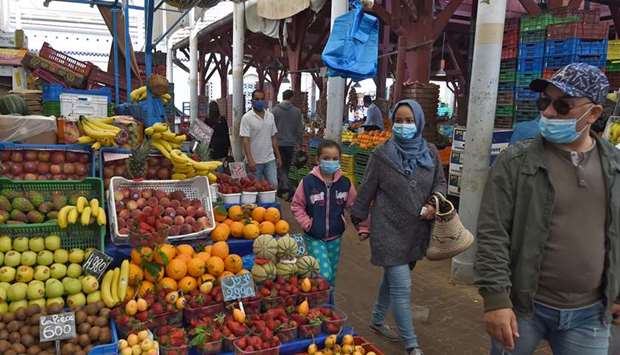
Tunisian, wearing protective masks, walk past stalls in a central market in the capital Tunis yesterday, during the first day of the holy month of Ramadan, after authorities partially eased the lockdown measures.