


Indian corporate bonds and bank stocks jumped after the central bank rolled out measures to support beleaguered shadow banks and laid the ground for more rate cuts.
Yields on top-rated 10-year local corporate notes declined up to 20 basis points, traders said. That’s the steepest fall in five months. Those on some top-quality rupee bonds of non-bank finance companies had one of the biggest drops in a year.
The BSE Sensex ended at 31,588.72 points, up 986.11 points or 3.22%, while the 50-share index Nifty closed 273.95 points or 3.05% higher at 9,266.75.
Indian authorities are stepping up stimulus along with peers around the world as the coronavirus pandemic plunges economies into recession. The stakes are particularly high for India, which has instituted the world’s biggest lockdown. It’s trying to balance steps to slow a surge in Covid-19 cases with efforts to keep markets from freezing up and hurting an economy already set for its slowest growth in a decade.
The RBI is injecting $6.5bn into shadow banks and micro finance firms. It also offered lenders relief on asset quality recognition and said it would aim to maintain ample liquidity, while halting dividend payments by banks until at least September.
Giving funds to the nation’s lenders via the targeted long-term repos will help some of the domestic shadow financiers tide over a cash squeeze, according to Jindal Haria, a director of financial institutions at India Ratings.
Some shadow banks will now be able to meet up to two months of cash requirements, helping them in the near-term on liquidity needs and fulfilling obligations, Haria said.
India’s earnings season is in full swing, with HDFC Bank Ltd, India’s most valuable lender by market capitalisation, scheduled to release quarterly results on Saturday. The stock climbed 3.4%, trimming its year-to-date loss to 30%.
For sovereign bond traders, the RBI’s cut to the reverse repurchase rate spurred a rally in short-end debt, with yields on the 2024 bond dropping 26 basis points. Traders hoping that the central bank would announce massive bond purchases were left disappointed.
Meanwhile the Indian rupee yesterday moved sharply higher against the US dollar amid an improvement in risk sentiment.
Other Asian currencies have also moved higher against the US dollar. The rupee yesterday opened at 76.56 and closed at 76.40 per US dollar after moving in the range of 76.35 to 76.63 against US dollar. The rupee had closed at 76.86 per dollar in the previous session after it hit a new low of 76.87.
The Reserve Bank of India yesterday cut its reverse repo rate by 25 basis points, in a bid to push banks to deploy excess funds within the system toward lending, and help revive growth. The RBI also announced measures to boost liquidity in the system.
Asian stocks gained traction yesterday after US President Donald Trump’s announced plans to gradually re-open the US economy. Data from China showed the world’s second-largest economy shrank for the first time since at least 1992 because of the coronavirus outbreak and tough containment measures. Gross domestic product contracted 6.8% in the quarter year-on-year, but it was better than some estimates.
“US President Donald Trump on Thursday announced guidelines for states to reopen their economy in three phases depending on meeting the specific case counts and hospital capacity thresholds. Asian currencies are stronger against the US dollar amid a positive risk tone,” said Abhishek Goenka, founder and CEO, IFA Global.
Some analysts expect the rupee to remain under pressure. “The extension of lockdown in India is likely to severely impact the Indian economy as well. Hence the rupee is expected to remain under pressure. However, sharp decline in the crude oil prices and huge amount of foreign exchange reserves may contain losses in the rupee,” said Rushabh Maru, research analyst at Anand Rathi Shares and Stock Brokers.
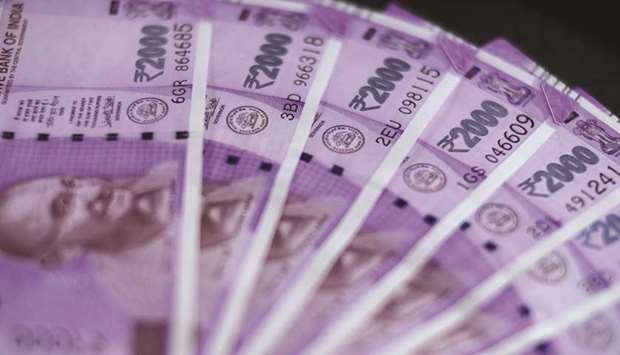
The rupee yesterday opened at 76.56 and closed at 76.40 per US dollar after moving in the range of 76.35 to 76.63 against US dollar