


Last week G20 nations pledged a “united front” in the fight against the rapidly spreading coronavirus, saying they were injecting $5tn into the global economy to counter the pandemic amid forecasts of a deep recession.
The IMF has stated that the coronavirus has caused a global recession. “We do project recovery in 2021,” IMF chief Kristalina Georgieva said. “In fact, there may be a sizeable rebound, but only if we succeed with containing the virus everywhere and prevent liquidity problems from becoming a solvency issue.”
The IMF is planning to double its financial capacity to alleviate the crisis. It is asking countries in need of help to apply sooner, rather than later, in order to contain the damage.
The IMF strongly support the extraordinary fiscal actions many countries have already taken to boost health systems and protect affected workers and firms. “We welcome the moves of major central banks to ease monetary policy. These bold efforts are not only in the interest of each country, but of the global economy as a whole. Even more will be needed, especially on the fiscal front,” it said.
The critical reforms include targeted fiscal support to vulnerable households and to large and small businesses, so they can stay afloat and get quickly back to work. Otherwise it will take years to overcome the effects of widespread bankruptcies and layoffs. Such support will accelerate the eventual recovery and put us in a better condition to tackle challenges such as debt overhangs and disrupted trade flows. It is paramount we recognise the importance of supporting emerging markets and developing economies to overcome the brunt of the crisis and help restore growth. They find themselves particularly hard-hit by a combination of health crisis, sudden stop of the world economy, capital flight to safety, and — for some — sharp drop in commodity prices.
Last weekend, US President Donald Trump signed a $2tn coronavirus relief bill. It passed the House earlier on Friday after getting through the Senate on Wednesday. The plan includes one-time payments to individuals, strengthened unemployment insurance, additional healthcare funding and loans and grants to businesses to deter layoffs. Trump signed the bill into law a day after data showed unemployment claims skyrocketed to a record 3.3mn last week.
Federal Reserve chairman Jerome Powell said last week the US economy could already be in a recession, but that it was unlike a typical downturn because the economy was so strong before the pandemic sent markets into a tailspin and unemployment soaring. He also stated that the virus is going to dictate the timetable. “The sooner we get through this period, and get this virus under control, the sooner the recovery can come.” Powell also explained the reasoning behind the Feds’ move to slash interest rates and buy securities to shore up the financial markets. Earlier the Federal Reserve came with a plan to buy corporate bonds and exchange traded funds that hold them. The Fed took its action in response to a dramatic drop in corporate bond prices in the past month.
China’s central bank unexpectedly cut the rate on reverse repurchase agreements by 20 basis points this week, the largest in nearly five years, as authorities ramped up steps to relieve pressure on an economy ravaged by the coronavirus pandemic.
Last Friday, in an emergency meeting, the Reserve Bank of India’s (RBI’s) monetary policy committee (MPC) cut the repo rate, the rate at which banks borrow from RBI, by 75 basis points (bps) to 4.40%. The Indian central bank announced that it is permitting banks to defer instalment payments on all term loans and working capital loans by three months. It clarified that this is also applicable to retail loans, farm loans and credit dues. This will come as a relief to many credit card holders, hit by pay cuts.
In the wake of the coronavirus outbreak, the Bank of Japan this week reiterated its stance that it was ready to relax some requirements financial institutions must meet to participate in its market operations. Even if financial institutions do meet necessary capital buffer and liquidity requirements, they will be eligible as counterparties to the BoJ’s market operations if the central bank deems, they will make steady progress in meeting the requirements.
In Qatar, the central bank (QCB) has cut rates twice in March 2020 in line with the US Fed action. In the last action, the QCB announced that it reduced its deposit rate (QCBDR) by 50 bps to 1.00%, lending rate (QCBLR) by 100bps to 2.50%, and the QCB repurchase rate (repo) by 50 bps to 1.00%. Qatar unveiled stimulus packages worth 75bn riyals ($20.5bn) for the private sector to help mitigate the economic impact of the coronavirus outbreak. The Qatar central bank was instructed to provide additional liquidity to banks operating in the gas-exporting state. Government funds were instructed to increase investment in Boursa by 10bn riyals. The government ordered the suspension of all loan payments for six months including payments to the Qatar Development Bank (QDB). The government exempted companies in the tourism sector, small and medium-sized industries and malls from paying water and electricity bills for 6 months. Customs of food and medical supplies will be lifted for 6 months. Guarantees worth QR3bn will be allocated to local banks as part of the directives of His Highness the Amir, Sheikh Tamim bin Hamad al-Thani, to support the economic and financial sector within the framework of the precautionary measures to combat the spread of the novel coronavirus disease (Covid-19). The QCB stated that the amount of QR3bn comes within the support package for granting soft loans and without commissions or fees for the affected companies to support salaries and rents through guarantees issued by the QDB to banks operating in the State.
On the whole, we are witnessing accommodative policies in the global arena on account of coronavirus.
* The author is Group CEO of Doha Bank.
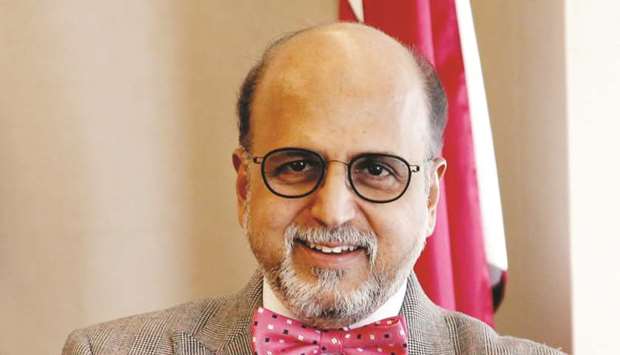
By Dr R Seetharaman