


Northern Ireland First Minister Arlene Foster was one of a number of policymakers criticised in an inquiry yesterday into the so-called “cash-for-ash” scandal, which caused a three-year suspension of the province’s government until January.
Northern Ireland’s political establishment was rocked in 2016 when it emerged that farmers were heating barns night and day to burn as many wood pellets as they could to take advantage of a flawed green-energy subsidy that gave them £1.60 for every £1 spent.
The scheme, which was overseen by then enterprise minister Foster, exposed Northern Ireland to hundreds of millions of pounds in costs and led to Irish nationalists Sinn Fein walking out of the power-sharing government with Foster’s Democratic Unionist Party over her role.
A judge-led inquiry found that Foster should not have signed off on documents provided by officials which did not contain all necessary information, but added that she had been ill advised by her special advisers and department staff.
While Sinn Fein initially insisted it could not return to power with the DUP if Foster remained as leader, the parties agreed to form a new government two months ago without such preconditions and Foster was reappointed first minister.
“For my part I am determined to learn from my mistakes and to work to ensure the mistakes and systematic failures of the past are not repeated,” said Foster, who previously apologised after initially dismissing criticism of her role as misogynist.
“Whilst I, my party and others have much to reflect upon, I am pleased that there has been no finding to support those who alleged improper motivation,” she said in a statement, reiterating her apology.
Retired high court judge Patrick Coghlin listed a mass of failures in the 656-page report and said the Renewable Heat Incentive (RHI) scheme was “a project too far” for the devolved government, established as part of a 1998 peace deal that ended three decades of political and sectarian violence in Northern Ireland.
While it identified some instances where behaviour was unacceptable, the inquiry found that “corrupt or malicious activity on the part of officials, ministers or special advisors was not the cause of what went wrong with the NI (Northern Ireland) RHI.”
Unlike a similar scheme elsewhere in the UK, the legislation in Northern Ireland lacked a cap, leaving taxpayers exposed to up to £490mn, almost 5% of the region’s annual budget.
Coghlin, who collected evidence from 114 days of hearings, said the Northern Ireland stand alone scheme should never have been adopted and recommended that ministers be given training on policy, legislation and on the workings of public expenditure.
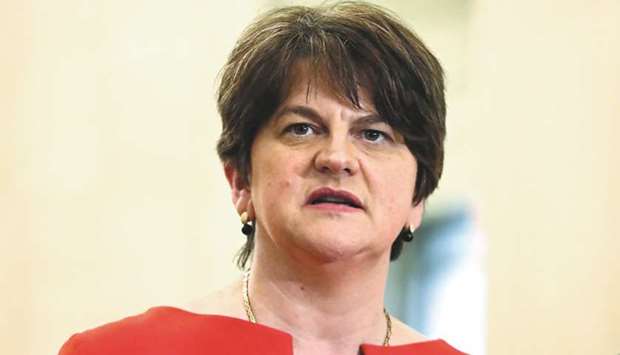
Arlene Foster: ‘determined to learn from my mistakes’