


Dalian Wanda Group Co, the Chinese conglomerate that borrowed billions of dollars to fund an acquisition binge, is facing a double whammy this year: a wall of maturing debt and a deadly virus that has hampered its operations.
The empire founded by billionaire Wang Jianlin, who once aspired to beat Walt Disney Co in entertainment, needs to refinance or pay about 39.8bn yuan ($5.7bn) of its bonds this year.
That is almost 36% of its total outstanding notes, the highest proportion of total bonds due among the nation’s top 25 firms, according to data compiled by Bloomberg.
The payment pressure comes at a time when the outbreak of the new coronavirus, which has killed more than 3,100 people, is striking at the heart of the group’s businesses by deterring shopping and travel.
The company has shut down malls, theme parks and cinemas to comply with epidemic-control measures, and is waiving or delaying rents for tenants.
Wanda is among the last few of China’s acquisitive non-state groups that have pared holdings over the past few years after snapping up assets from Hollywood studios, hotels, Manhattan buildings to European football clubs.
Last week, the government started taking charge of debt-laden HNA Group Co after the contagion hurt the once-acquisitive firm’s ability to meet financial obligations.
“Wanda’s 2020 outlook wasn’t great before the coronavirus outbreak devastated the company’s core markets, and the company will almost certainly require refinancing as the year progresses,” said Brock Silvers, managing director at Adamas Asset Management in Hong Kong.
While this may cause some tumult within the group, tycoon Wang may manage to avert any potential crisis with refinancing options, Silvers added.
Still, the looming debt bill underscores the challenges many of China’s businesses are confronting as the $14tn economy sputters.
For Wanda, the timing couldn’t be worse.
Dalian Wanda Commercial Management Group Co had a total debt of 333bn yuan as of September 30, more than twice its liquid assets, according to data provided by the firm.
Fitch Ratings says the company accounted for about 80% of the conglomerate’s earnings before interest, taxes, depreciation, and amortisation in the first half of 2019.
Revenue at the operator of malls dropped 32% in the first nine months of last year, while net income fell 26%. A representative for Wanda didn’t respond to requests for comments on the payments due or the impact of the virus outbreak on the company’s finances.
Eight bonds issued by Wanda’s subsidiaries are due this year. A majority of them were issued by Wanda Commercial Management.
A 1.8bn yuan bond issued by Beijing Wanda Cultural Industry Group Co is also due March.
That firm contributed to 20% of the group’s Ebitda, operating Wanda’s sports and entertainment assets.
With over a third of the combined value of its notes maturing in 2020, Wanda has the highest proportion of bonds due among some of the country’s top performing companies.
That’s based on Bloomberg-compiled data available for 16 firms with over 2bn yuan in bonds on a list of the top 25 firms selected by All-China Federation of Industry and Commerce.
Wanda’s debt piled up as it set about buying a stake in Spanish football club Atletico Madrid, properties in Beverly Hills, American theatre chain AMC Entertainment Holdings Inc and Hollywood studio Legendary Entertainment LLC in a debt-fuelled binge between 2012 and 2016.
When authorities in Beijing cracked down on capital outflows, Wanda ended up selling some, including its real estate projects in London and Australia.
Wanda Sports Group Co, part of the Dalian Wanda conglomerate, said last month that it’s engaging in preliminary discussions on a potential sale of its Ironman triathlon business.
Dalian Wanda bought the business for $650mn in 2015.
As the fallout from the health crisis spreads to companies, China’s financial regulators have told lenders not to downgrade loans with missed payments or report delinquencies before the end of June.
China is estimated to have lost about 1tn yuan from box office, food and drinks, retail and tourism sectors during the seven-day Lunar New Year holidays, equivalent to 4.6% of the first-quarter GDP last year, according to a report by Evergrande Research Institute last month. Cinema halls have been shut since late January, meaning those losses are mounting.
The rental waivers are estimated to cost Wanda Commercial 3bn yuan, equivalent to about 10% of its annual rental income in 2018 and 3% of that year’s total revenue, according to a report by Shanghai-based SWS Research Co earlier this month.
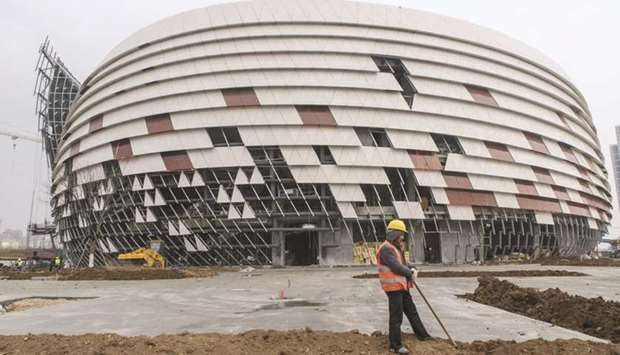
A worker is seen at an opera theatre construction site inside the Dalian Wanda Group’s Oriental Movie Metropolis project site in Qingdao. The Chinese conglomerate that borrowed billions of dollars to fund an acquisition binge, is facing a wall of maturing debt and a deadly virus that has hampered its operations.