


Turkey is pressing its lenders to focus on expanding credit by lowering and even eliminating the fees earned on customer transactions, leaving banks with only a handful of commissions they can charge commercial clients.
The changes, published in the Official Gazette on Monday, cut the number and types of commissions banks can impose. The regulations are a response to client complaints such as overcharging and a lack of transparency, the central bank said.
The 12-member Borsa Istanbul Banks Sector Index fell as much as 1.6% at the opening and was down 0.2% at 12.25pm.
The new regulations add to a slew of measures already in place to revive the flow of credit.
But while consumer loan growth is picking up, commercial credit has lagged. It’s up by around 20% this year, on an annualised basis and adjusted for foreign-currency fluctuations, after shrinking as much as 15% in 2019. Consumer lending has surged 50% this year.
The latest effort also underscores the government’s criticism of private banks for focusing on profit instead of boosting credit at the same pace as state lenders. The decision to lower charges came after Turkey’s anti-trust authorities started a preliminary probe into more than 20 banks to determine whether they violated competition law in offering deposit, credit, foreign-exchange and brokerage services to clients.
Fees and commissions account for about 12% of total bank revenue, according to data compiled by the banking watchdog. Income from the charges rose 33% in the year through December.
On Monday, the number of fees and commissions for commercial clients was cut to 51 from 2,400 and to 16 from 20 for retail accounts, while credit placement fee for corporates was capped at 1% of the amount used.
A 1 lira limit was set for retail customers’ wire transfers under 1,000 liras ($167). The changes will go into effect March 1
“It is pretty hard to say at this stage how much the new regulations will affect the fee revenues of the banking sector,” Deniz Invest banking analyst Sadrettin Bagci said in an e-mailed note. “All banks guided for much lower fee growth for 2020, mostly in high single digits. We think that state banks may be affected more negatively compared to private banks due to their high base in 2020.”
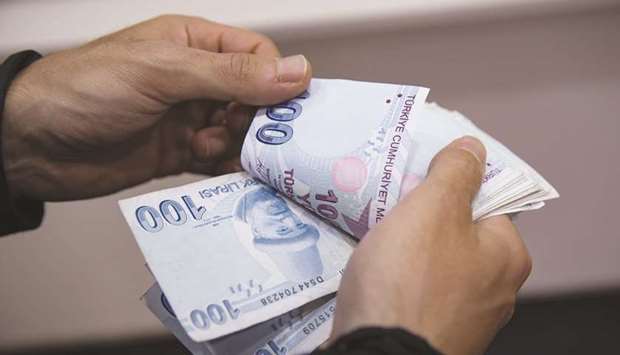
A customer counts Turkish 100 lira banknotes inside a foreign currency exchange bureau in the Beyoglu district of Istanbul (file).