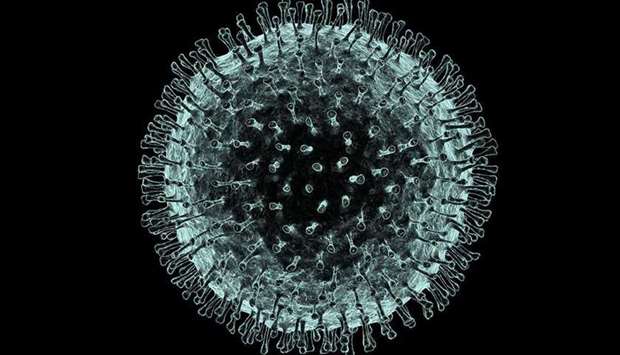
Special Assistant to the Prime Minister on Health Dr Zafar Mirza has announced that Pakistan is now capable of diagnosing the novel coronavirus (nCoV), which has killed more than 300 in China and infected more than 14,000.
“As of today, we have now the capability of diagnosing coronavirus in Pakistan,” he tweeted, along with a picture of Pakistani health officials wearing the health kit.
Mirza also lauded the leadership and team of the National Institute of Health (NIH) for their hard work in securing the reagent for diagnosing.
The official had announced in a press conference on Saturday that Pakistan would soon receive the health kits, which would allow the authorities to detect the virus.
“We will now start carrying out tests to determine the coronavirus,” Mirza had said in a press conference in Islamabad.
It was reported earlier this week that the first consignment of reagents has been donated by Japan.
Earlier, Pakistan’s envoy to China said that the country lacked medical facilities to treat the persons and that Pakistanis in Chinese city Wuhan, the epicentre of the outbreak, should not be evacuated.
China has the best health facilities to deal with the disease and fight the deadly virus, Naghmana Hashmi told Geo News in an interview.
Meanwhile, a directive from the health ministry requires all passengers entering Pakistan to submit a health declaration form, which will include contact details and brief travel history.
The submission of the completed form will be essential for entry into Pakistan, said a press release issued by the Aviation Division over the weekend.
The health declaration forms will be distributed to all the passengers in plane.
In view of nCoV outbreak, all passengers are advised to complete the form and hand it over to health staff at the International Arrival Lounge.
Non-compliance would result in denial of entry to the country.
The form contains demographic information of passenger, travel history and health status issues, including fever, cough and shortness of breath.
Meanwhile, medical supplies from Pakistan to Wuhan have reached China.
The medical supplies include 300,000 medical masks, 800 hazmat (hazardous material) suits, and 6,800 pairs of gloves.
A number of other countries have also offered donations of medical supplies to China to express their support for its fight against the epidemic.
A Pakistani doctor who volunteered to treat coronavirus patients in Wuhan has been hailed by Pakistani students there, as well as by other community members residing in China.
Dr Mohamed Usman, a teacher at Changsha Medical College, is the first foreign doctor who stepped forward to treat infected people in Wuhan.
Chinese Foreign Minister Wang Yi has said that Pakistan’s help and support to China during a difficult time had once again highlighted the deep friendship between the two countries.
“At a time when the Chinese people are experiencing difficulties, Pakistan has spared no effort to give China a helping hand, once again highlighting the deep friendship between the two countries,” he said in remarks made by telephone to Foreign Minister Shah Mahmood Qureshi, according to China’s ministry of foreign affairs.
He said that Pakistan had nearly 1,000 citizens in Wuhan, and appreciated the Pakistan government statement that it had no intention to evacuate them, which fully reflected its trust in the Chinese government.
“We will continue to safeguard the safety and health of our Pakistani brothers and sisters, and provide them with all necessary assistance,” Wang added.
He remarked that China and Pakistan are close neighbours and have a fine tradition of helping each other.
He stated that under Chinese President Xi Jinping’s personal deployment, China had established a nationwide mechanism and taken decisive measures to prevent and control the epidemic.
“At present, all work is progressing in an orderly manner, and China is fully capable, confident and confident in achieving its final victory,” he added.
The Chinese minister pointed out that the World Health Organisation (WHO) clearly stressed that China’s measures to prevent and control the epidemic were timely and effective, and the WHO clearly did not support any travel or trade restrictions on China.
He lamented that despite the WHO’s advice, individual countries have announced comprehensive travel bans on China.
This risky approach is not desirable in international exchanges.
“We believe that the international community, including Pakistan, can fully respect the important opinions of the WHO and continue to support China’s efforts to prevent and control the epidemic,” Wang added.