


The losses on equity markets extended into Asia, with Tokyo down almost 2% as dealers returned for the first time since the new year break.
Hong Kong lost 0.8%. Singapore fell 0.7%, Seoul shed 1%, Taipei and Mumbai each lost more than 1% and Manila dived 0.9%, with Jakarta down 0.7%.
Shanghai ended flat as investors cheered a pledge by authorities at the weekend to support China’s troubled banking sector and small businesses in the face of a growing debt mountain.
Equity markets tracked losses on Wall Street, where the three main indexes fell from record highs.
In Tokyo, the Nikkei 225 closed down 1.9% to 23,204.86 points; Hong Kong — Hang Seng ended down 0.8% to 28,226.19 points and Shanghai — Composite ended flat at 3,083.41 points yesterday.
While markets were broadly lower, energy firms rallied on the back of higher crude prices.
Inpex jumped more than 4% in Tokyo while in Hong Kong, PetroChina added 4% and CNOOC surged 3.6%.
Friday’s attack sent shockwaves through global markets, which had been enjoying a healthy run of gains in the wake of the China-US trade deal, which eased tensions between the economic powers.
Looser central bank monetary policy, improving economic data and easing concerns about a possible no-deal Brexit had also lent support.
“Everyone got comfortable in that fact that the truce in the trade war had come through and the outlook for 2020 looked a little bit better and then we had another geopolitical reminder come through,” Peter Dragicevich, a market strategist at Suncorp Group Financial, said.
Meanwhile oil prices surged, gold hit a more than six-year high and most equities tumbled yesterday after the US assassination last week of a top Iranian general fanned fears of a major conflict in the Middle East.
Donald Trump warned of a “major retaliation” against Tehran after it threatened revenge for the killing on Friday of commander Qasem Soleimani, which shocked world markets and sparked a sell-off in stocks and a spike in crude.
The crisis has jolted investors, who had been in an upbeat mood as China and the US prepare to sign their mini trade deal next week, while data indicates a slight improvement in the global economy.
Safe-haven assets popular in times of turmoil were also on the rise, with gold at highs not seen since mid-2013, while the Japanese yen was at a three-month high against the dollar.
“The nasty wake-up calls that no one wanted to start the year has roused the global stock market as investors had assumed smooth sailing after the phase one trade deal was announced,” said AxiTrader’s Stephen Innes. “Now they’re scrambling to seek out safe harbours.”
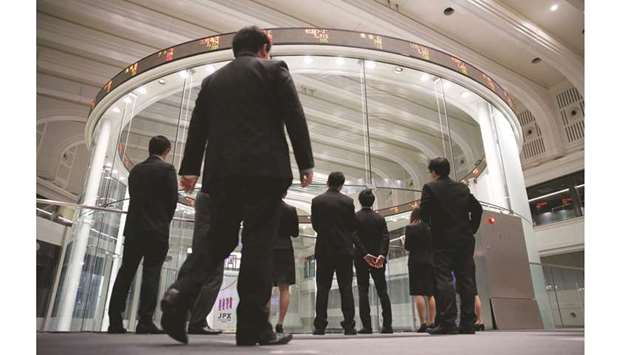
Visitors watch stock prices at the Tokyo Stock Exchange. The Nikkei 225 closed down 1.9% to 23,204.86 points yesterday.