


Turkey is limiting the amount of hard currency local banks can exchange for lira with foreign investors, a move that could benefit the central bank by pushing dollar liquidity into its official reserves.
The Banking Regulation and Supervision Agency, or BDDK as it’s known, will limit the amount of foreign-exchange swaps, forwards and other derivatives with a maturity of seven days or less to a maximum of 10% of banks’ equity, it said late on Wednesday.
By restricting the amount of dollars that banks can park with offshore funds, regulators may prompt Turkish banks in need of lira liquidity to tap the monetary authority’s own swap facility instead. As of October, the outstanding amount of short-term swaps with the central bank stood at $13.8bn dollars, which the monetary authority reports as part of its foreign-currency holdings.
This latest attempt to wean local lenders away from the so-called offshore swap market may also help deter short-term speculative positioning in the lira. Traditionally, the swap market has been one of the biggest sources of funding for banks in Turkey and a key pool of lira liquidity for foreign investors trading local assets.
Volumes in the offshore market have collapsed since authorities began limiting the lira leg of offshore swap transactions last summer, in a bid to stand in the way of short sellers after last year’s currency crisis. In September 2018, the banking regulator capped the amount of liras banks can lend offshore to 25% of equity.
The 12-month average daily turnover of swap trades with foreign clients fell to around $4bn in December, down from more than $7bn in March 2018, according to central bank data.
“The regulator looks like it’s trying to prevent carry trades,” said Erkin Isik, the chief economist at QNB Finansbank in Istanbul. “The regulator may also want to prevent FX outflow and encourage banks to use the swap mechanism with the central bank.”
On Thursday, the central bank offered lenders a $1bn three-month swap auction. Short-term swap rates offshore plummeted after the announcement, with the overnight rate falling below 4%, some 800 basis points below the central bank’s own cost of funding.
The lira reversed earlier gains and was down 0.1% against the dollar at 5.9350 at 2:15pm in Istanbul. It has lost 4% over the past month, making it the worst-performing emerging market currency tracked by Bloomberg in the period.
Turkey’s gross foreign-currency reserves fell to $79bn as of December 6, from $96bn two years ago, according to central bank data.
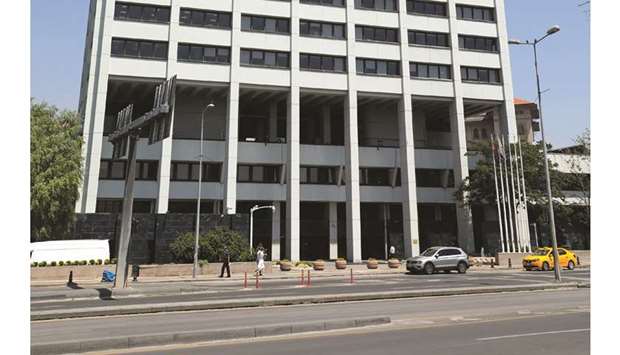
Pedestrians pass the headquarters of the Turkish central bank in Ankara (file). Turkey is limiting the amount of hard currency local banks can exchange for lira with foreign investors, a move that could benefit the central bank by pushing dollar liquidity into its official reserves.