


HSBC Holdings Plc’s credit rating may be cut by Moody’s Investors Service, which joined S&P Global Ratings in highlighting the challenges of the bank’s turnaround plan and deteriorating economies.
Moody’s said Wednesday that it changed its outlook on HSBC to negative from stable, warning that the Asia-focused lender’s reshaping of its businesses in Europe and the US would be costly and increased the company’s risk level.
Moody’s expects “subdued profitability” in the next two years, Alessandro Roccati, senior vice president at the ratings firm, said in a statement.
The revamp of HSBC’s global operations, which span 65 countries and 235,000 staff, is expected to lead to fresh write-offs and an exit from French retail banking as the firm embarks on its third major restructuring in a decade. Analysts at Jefferies International Ltd said in a note last month that the work could result in a fourth-quarter charge of $4bn.
HSBC will announce details of the overhaul alongside its full-year results, which will be published in February. Last month, S&P put HSBC’s credit rating on negative watch, saying that the plan risked weakening the bank. S&P’s move was followed weeks later by Fitch Ratings, which downgraded the lender to A+ from AA-.
In August, HSBC ousted chief executive officer John Flint, replacing him on an interim basis with global commercial banking head Noel Quinn, now considered the front-runner to become the permanent boss. Quinn is leading the restructuring, and has said that the bank’s previous plans were “no longer sufficient to improve performance.”
Revamping HSBC’s European investment bank “and its French retail franchises will entail substantial restructuring costs and net income losses over the outlook period and will increase execution risk,” said Moody’s. It added that a “more focused and leaner group, with more efficient capital allocation and higher profitability,” could emerge if the plan is successful.
Last week, HSBC announced a series of management changes, including the stepping down of Samir Assaf as head of its global banking and markets unit, as well as the retirement of chief risk officer Marc Moses.
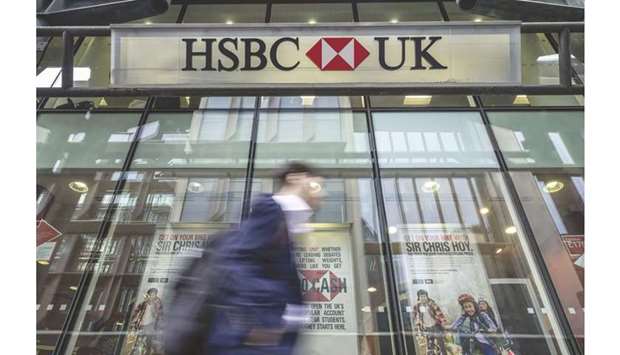
A pedestrian passes an HSBC Holdings bank branch in London. Moody’s said Wednesday that it changed its outlook on HSBC to negative from stable, warning that the Asia-focused lender’s reshaping of its businesses in Europe and the US would be costly and increased the company’s risk level.