


As I have increasingly become involved with the sociological and social psychological analysis of new socio-political uprisings and movements taking place in the Arab region under the triggering 2011 cry out (People want), I have begun to question the common perception of citizenship and the hieratical concept of social contracts. I kept asking myself what happens to citizenship when the nation and the state are no longer assumed to be the inevitable starting points from which politics is defined.
This has prompted me to conceptualise my fieldwork observations to what is refer to as “citizenship from below”. Viewing the social dynamics of this concept needs new lenses and navigation through the framework of two emerging concepts in the literature of new social uprisings, namely insurgent citizenship and insurgent public sphere. I am of the opinion that using different tools and methods allow us to be more creative in our thinking, to be able to grasp different dimensions of politics and to imagine and foster different aspects of new uprisings that are emerging.
Protests as acts of citizenship is an accompanying concept to citizenship from below. They both provide a language in which to discuss the struggles of people and their protests and uprisings by emphasising their subjectivity as political actors. Here the notion of “acts of citizenship” draws attention to the fact that subjectivities like citizens do not just exist as pre-social, settled identity. In the information age citizenship is globalising as a regime of governing with new agency. These subjectivities exist in relation to one another and are produced through acts or “creative breaks” that “rupture or break the given orders, practices and habitus. ”
I think the challenge for us as researchers in the social sciences engaged in understanding social transformations taking place in Arab societies is to develop new paradigms, come up with grounded theories of change and coin new concepts in understanding social dynamics based on the complexity of social phenomena to discuss the types of politics unfolding in the region and which we wish to envision materialising.
The recent wave of protests in the region share many characteristics of social movements that have sprung up in recent years in many parts of the world. These movements differed from the norms and rituals of conventional social movements and operated with a new “self-help” and “self-actualisation” ethos.
Social media provides to this new wave of protests an archive, a memory and a repository of text and audio-visual symbolic content relating to protests, tactics, organisations, and ideas. The self-mediations of protesters contribute to a global archive of protest artefacts. The permanent nature of these artefacts enables the symbols embedded in these discourses to be culturally transmitted, feeding struggles and contributing to a collective memory of protest.
Sociologically, the participants in such movements conceived of themselves as autonomous individuals submitting themselves to collective actions only through consensus. Collectivity enjoyed no privileged status over individuality in the movements. This ethos resulted in a “leaderless” movement: every participant was equal; no hierarchy or common ideology was adhered to (sectarianism or otherwise unless penetrated). Some sociologists called this phenomenon “do-it-yourself” politics.
What has become as a notable trend is the rise of more personalised politics among the young generation. They are more interested in personally meaningful, lifestyle-related political issues than party politics, giving rise to “consumer politics”.
We can see also that personal action frames displace collective action frames. Collective actions are becoming more and more mobilised around personal lifestyle values, including the rise in individual awareness of illegitimate inequality, feelings of relative deprivation, feelings of injustice, moral indignation about some state of affairs. Feelings of relative deprivation result from comparison of one’s situation with a standard — be it one’s past, someone else’s situation, or a cognitive standard such as equity or justice and corrupted political elites.
Emotions also play a crucial role in personal action, both negative (fear, outrage, or shame) and positive (trust, loyalty, or hope). Emotions are central to protests, and without emotions, there might be “no social action at all”. Instead of dismissing emotions as irrational and dangerous (as was the case in the early sociology of the crowd), we should see them as powerful motivators, which explain both momentary action and continued allegiance.
More importantly, analysis of the recent wave of protests reveal that there has been a decay in old established social contracts and a decline in group loyalty and clear social fragmentation, as well as an increase in personal stress and a sense of responsibility for choices and consequences but with no clarity on alternative policies and societal transformation programming.
We can also observe that while the protestors draw on repertoires of action from the past, the new form of collective action display openness to individual-level/agency action aided by clear avoidance of formal organisation, leaders, collective identification, divisive ideology, or hierarchy. Other feature of the new form of mobilisation is the active participation of youth and the utilisation of highly personalised digital networks to co-ordinate and maintain the movement’s momentum.
This generation does not distinguish between online and offline identities. They are “digital natives” as distinguished from us as “digital immigrants”, who pick up digital skills like learning a new language later in life and speak the new language with an accent. Digital natives function best when networked, and thrive on instant gratification and frequent awards.
To understand the social dynamism of protest movements as (act of citizenship), we should take into consideration the complexity of the process. Protests produce adaptive actors and emerging self organisation patterns that do not exist before acts. So while citizenship is most often investigated as a legal and political institution, based on status, rights and duties within a polity, or as involving practices that lead to distinctions between formal and substantive citizenship, investigating citizenship through acts places the political and political relations at the centre of the investigation into citizenship.
To support this argument and use it as a frame of reference to understand the new wave of protests in our region, we need to work with a new concept of citizenship that differ from the traditional understanding of citizenship as a modern liberal institution conferring legal status and political membership in a political community (most often that of the nation-state).
In the same realm our conventional outlook towards the functions and roles of the public sphere should be altered. The emerging of social media as Insurgent Public Sphere (IPS) is a common element among the new wave of protests. Social media can assume an (IPS) role mainly because it has an individuated networked structure. It provides a platform where individuals can express their private dissenting views, yet with the potential of reaching huge and diverse audiences through numerous private and public networks.
The IPS emerges when great public controversies appear in society, where the dominant public, state, or market stifles free expression, discussion, and debates in traditional mass media that are controlled by the state and/or the market.
We can define IPS as a public space for counter publics to interconnect, discuss issues, construct collective identity, articulate common goals, and engage in collective actions, online or offline, in direct opposition to and confrontation against the dominant public, the state or the market.
But the emergence of the IPS is not all positive. Social media allow individuals to conduct their lives in an information abundance stream, pumping out and receiving information and social influence, in which they are exposed to many contradictory and overlapping currents of information, views, influences, causes, campaigns, and of concerns that widen rather than narrow their political experience. In fact what has emerged out of the IPS is a new form of pluralism i.e: chaotic pluralism.
As for the impact of this widespread informalisation of politics and insurgency there are still great deal of ambiguities. Assessing outcomes is notoriously difficult. Methodologically, It is a country focused and context specific research investigation, if we want to conceptualise their political impact as the effect they have on political agendas, ie whether or not issue-attention increases after the uprising.
The difficulty of sustaining mobilisations that lack leaders, institutions and organisation is a major problem. Often, there are no political leaders or embryonic parties waiting in the wings, which is perhaps one reason why we have seen such disappointing results of the Arab spring uprisings.
In the political sciences literature the basic idea is that demonstrations influence the political agenda and introduce change if they take place under favourable political circumstances, defined through the presence of three factors: (1) a democratic regime, (2) a programmatic party system, and (3) a polity open to the challenger’s’ claims. None of these exist in the cases of the recent wave of protests in the region.
Therefore, we should take into consideration that the acceptability of informalisation of politics for formal politicians is likely to be unevenly distributed across political roles, and the evaluation of such presentational styles is also likely to vary between citizen groups.
As insurgent citizenship unsettles the traditional legal and social balance of the public sphere, governments react with segregation and violence. They will be unwilling to respond de jure (in law) and de facto (in practice) to the demands of these movements, as diverging understandings of politics collide: Faced with such “organic” forms of political participation in the insurgent public sphere, states aim to reassert the supremacy of “institutional politics” as codified by the constitutional and legislative orders.
On another front, we should not neglect the role of traditional mass media. They also play a significant role in mediating and amplifying the impact of protest. They are active actors covering, framing and interpreting issues and protest events. That is to say, they make big demonstrations look ‘bigger’ and grim demonstrations look ‘grimmer’. The amplified images in their turn impact on political and public agendas.
More importantly, the role of foreign influence should not be underestimated. Nations, or regions are characterised by a multitude of vulnerabilities when it comes to international influence. The types of geopolitical interest and balance of power calculations explain the outbreak of conflict or its prevention/ abortion, or its dynamics.
In analysing the regional and international influences on the fate of protests and transition to democratisation in the given country, there are two possibilities of interferences, namely, (a): leverage and (b) linkage. The first is the stick and the second is the carrot. Leverage happen when the given government under attack by protestors is vulnerable to Western pressure. Linkage takes place, when the density of economic, political, organisational, social, and communication ties between particular countries or the region in general and the West is vital and democratisation is imminent.
In conclusion, studies on citizenship from below, process and outcome-mechanisms of protests in our region are still inconclusive and incomplete. To fully understand the complexity of emerging adaptive behaviour and self organisation, when and how protests and uprisings are resilient to trigger creative break and ensure safe democratic transition, and how that affect political relations, we need to identify mechanisms that account for change and that must be analysed. Questions and inquiries like the following need answers in order to understand the social dynamics of protests: (1) Which mechanisms prevail when? (2) How do the mechanisms interact and feedback each other? and (3) When do mechanisms mediate or amplify demonstrations’ impact on political agendas and relations ? Such encompassing sociological questions should be addressed in a whole-of-the-system thinking that encompass the three interrelated levels of (a)structures, (b) institutions and (c) individual agency. Developing such paradigm will help us with the formation of grounded theories of change. This constitutes the vital next step in this field of protests and social transformation research.
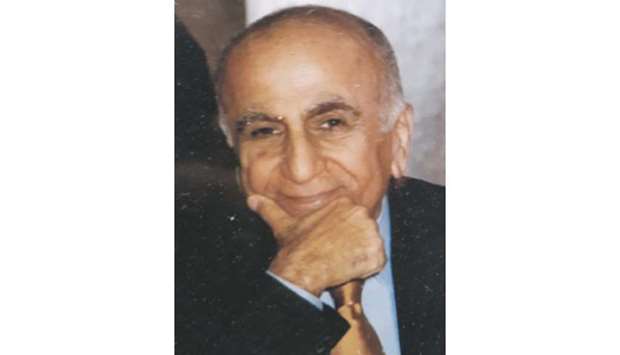
Darim Al Bassam